Blockchain IoT Use Cases: 6 Worth Knowing in 2026
Blockchain gives IoT data a shared record no single party controls. Six use cases, from supply chains to smart grids, show where the combination earns its keep.
On this page
Short answer
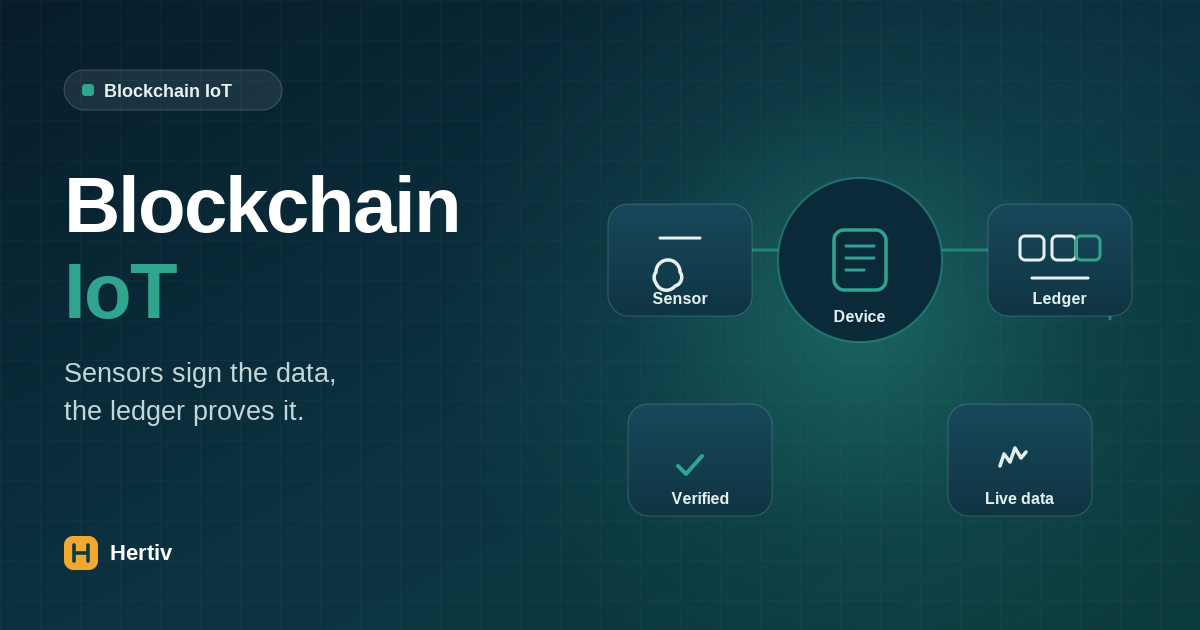
Blockchain IoT use cases combine sensor data from connected devices with a shared, tamper-resistant ledger. Supply chains, device identity, cold chains, smart grids, vehicle telematics and healthcare devices all use the same pattern: sensors sign data at the source and the blockchain stores a record everyone can check.
Blockchain IoT use cases at a glance
Blockchain and the Internet of Things solve different problems that fit together well. IoT devices collect data from the physical world, and a blockchain gives that data a shared, tamper-resistant record that no single party controls.
| Use case | What IoT adds | What blockchain adds |
|---|---|---|
| Supply chain tracking | Sensor readings on goods | Shared shipment history |
| Device identity | Unique device IDs | Verifiable credentials |
| Cold chain monitoring | Temperature sensors | Proof conditions were met |
| Smart energy grids | Meter readings | Peer-to-peer settlement |
| Vehicle telematics | Location and usage data | Auditable trip records |
| Healthcare devices | Patient device readings | Consent and access logs |
The pattern is the same in each case: sensors produce data, the data is signed at the source, and the blockchain stores a record that all parties can check. The hard part is usually the device side, not the chain. Sensors need power, connectivity and secure keys, and a device in a truck or a field is far harder to protect than a server in a data centre.
<h3>1. Supply chain tracking: best for proving provenance</h3>
Supply chain tracking pairs sensors on shipments with a blockchain record of each handover. A pallet of goods can carry temperature, humidity and location readings that are signed and written to a shared ledger as it moves.
Buyers, sellers and auditors all see the same history, which cuts disputes about when and where a problem happened. Food, pharma and luxury goods benefit most, because provenance is part of the product's value.
- Pros: shared record across companies, faster dispute resolution, audit trail
- Cons: needs all parties to join, sensors add cost, garbage in means garbage out
<h3>2. Device identity: best for stopping fake devices</h3>
Device identity gives each IoT device a verifiable credential on a blockchain, so a gateway can check that a device is genuine before accepting its data. The credential is issued when the device is made and can be revoked if it is compromised.
This matters because fake devices can feed false data into a system, from a spoofed sensor in a factory to a cloned meter in a smart grid. A shared identity registry lets any party verify a device without asking the maker each time.
- Pros: stops cloned devices, works across vendors, revocation is fast
- Cons: needs a trusted issuer, key management on tiny devices is hard
<h3>3. Cold chain monitoring: best for pharma and food</h3>
Cold chain monitoring uses temperature sensors in trucks and warehouses, with readings written to a blockchain so they cannot be edited after the fact. A vaccine shipment or a container of fresh food can prove it stayed within its safe range.
Regulators and buyers accept the record because the sensor signs the data and the chain timestamps it. If a shipment does go out of range, the record shows exactly when, so the fault can be traced to one leg of the journey.
- Pros: tamper-resistant proof, faster recalls, regulator-friendly records
- Cons: sensor batteries and connectivity, cost per shipment
<h3>4. Smart energy grids: best for peer-to-peer trading</h3>
Smart energy grids use meters that record how much power each home or business produces and uses. A blockchain can settle trades between neighbours, so a household with solar panels can sell surplus power to the house next door.
The chain records each trade and the meter data behind it, which removes the need for a central clearing house for small trades. Utilities still run the grid, but settlement becomes automatic and auditable.
- Pros: automatic settlement, local energy markets, auditable meter data
- Cons: regulation varies, needs smart meters everywhere, low margins per trade
<h3>5. Vehicle telematics: best for fleet and insurance</h3>
Vehicle telematics combines GPS and sensor data from cars and trucks with a blockchain record of trips, maintenance and usage. A fleet operator can prove how a vehicle was driven, and an insurer can price a policy on real usage.
The shared record helps when a claim is disputed, because the trip data is signed by the vehicle and timestamped. Used-car buyers also gain from a mileage and service history that is hard to forge.
- Pros: auditable trip history, usage-based insurance, less fraud
- Cons: driver privacy concerns, data volume, hardware cost per vehicle
<h3>6. Healthcare devices: best for consent and access logs</h3>
Healthcare devices such as wearables and home monitors produce readings that patients share with clinics. A blockchain can record who accessed the data and under what consent, so the patient keeps a clear trail.
The readings themselves usually stay off-chain for privacy, with only a signed fingerprint stored on the ledger. That way the data can be checked for tampering without exposing it to everyone on the network.
- Pros: clear consent trail, tamper checks, patient control
- Cons: strict health rules, key loss locks patients out, integration work
How to choose a blockchain IoT use case
Choose a blockchain IoT use case by starting with the trust problem, not the technology. If one company controls all the data and everyone trusts it, a database is simpler and cheaper.
- Find the shared record. Pick a case where several parties need the same data and do not fully trust each other.
- Check the device. Confirm the sensor can sign data and connect reliably in the real location.
- Decide what goes on-chain. Store fingerprints and proofs on-chain, and keep raw readings off-chain.
- Test with one fleet. Run a pilot with a small group of devices before rolling out to thousands.
- Plan key management. Decide how device keys are issued, rotated and revoked before launch.
Teams building the device and chain sides together should plan the integration early, since the hardest work sits at the boundary. A partner for blockchain development can help design that boundary.
What are the common mistakes?
The most common blockchain IoT mistakes are putting raw data on-chain, ignoring device security, and building a chain where a database would do.
- Storing raw sensor data on-chain. Chains are slow and costly for bulk data; store a signed fingerprint and keep the readings off-chain.
- Ignoring device security. A chain cannot fix a sensor that has been tampered with, so secure the device first.
- Using a chain for one company. If only one party reads and writes the data, a database is simpler.
- Forgetting key management. Thousands of devices mean thousands of keys, and a lost or leaked key is hard to fix at scale.
- Skipping the pilot. A small pilot reveals battery, connectivity and data problems before they become expensive.
Key takeaways
- IoT collects the data; blockchain makes it checkable
- Store fingerprints on-chain and raw readings off-chain
- Device security matters more than the chain
- The best cases involve several parties who do not fully trust each other
- Pilot with a small fleet before rolling out
Frequently asked questions
What is blockchain IoT?
Blockchain IoT is the combination of connected sensors with a blockchain ledger. Devices collect data from the physical world, sign it, and the blockchain stores a shared record that all parties can verify without trusting a single central system.
Why use a blockchain with IoT?
A blockchain helps when several parties need the same device data and do not fully trust each other. It gives them a shared, tamper-resistant record of what happened, which cuts disputes. If one company controls all the data, a database is usually simpler.
What data goes on the blockchain?
Only small proofs go on-chain, such as a signed fingerprint of a sensor reading or a record of who accessed data. Raw readings stay off-chain in a database or file store, because chains are too slow and costly for bulk sensor data.
Is blockchain IoT expensive?
The cost comes mostly from devices, connectivity and integration, not the chain itself. Sensors, batteries and data plans add up across thousands of devices, so a pilot with a small fleet is the best way to learn the real cost before scaling.
Which industries use blockchain IoT most?
Supply chain, food and pharma lead, because provenance and temperature proof are part of the product. Energy, transport and healthcare follow, each with its own rules on data, privacy and regulation that shape the design.
What is the biggest risk in blockchain IoT?
The biggest risk is trusting data from a device that has been tampered with. A blockchain can prove a record was not changed after it was written, but it cannot prove the sensor told the truth. Secure the device and its keys first.


