Are NFTs Shaking Up the Digital Art World?
NFTs gave digital artists a way to sell original work with proof of ownership, changing how art is bought and sold. Here is what actually changed and what did not.
On this page
Short answer
Yes, NFTs changed the digital art world, but in a narrower way than the early headlines suggested. They gave digital artists a way to sell an original work with a public record of ownership, earn a share of later resales, and reach buyers without a gallery. The market itself is still small and uneven, and most artists earn little.
Are NFTs shaking up the digital art world?
An NFT is a unique token on a blockchain that records who owns a specific digital item, such as an image, a video or a piece of music. Unlike a copy of a file, which anyone can download, the token points to one edition and its ownership history is public.
That record is what changed digital art. Before NFTs, a digital image could be copied without limit, so selling an original was hard. An artist could sell prints or licences, but there was no simple way to sell the work itself as a one-of-one object. NFTs gave that sale a form buyers could understand.
The change is real, but it is partial. NFTs opened a new market and a new income route for some artists, while the wider art world kept working much as before. Galleries, museums and auction houses still handle most high-value art, and most NFT sales are small. To see how the token works, start with what NFT artwork is.
What changed for digital artists?
The biggest change for artists is direct access to buyers. An artist can mint a work, list it on a marketplace and sell it to a collector anywhere, without waiting for a gallery to accept the work. The artist sets the price and keeps most of the sale, minus the marketplace fee and the network fee.
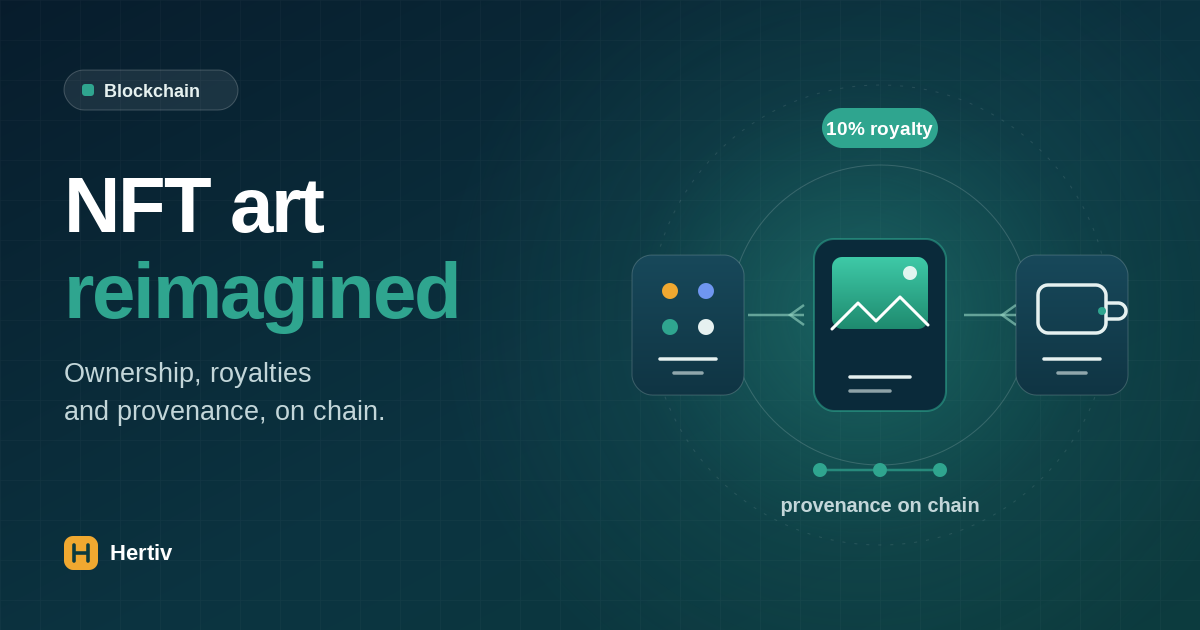
Royalties are the second change. A smart contract can send the artist a share of the price each time the work is resold. In the traditional art world, an artist usually earns nothing from a resale. With NFTs, resale income became a normal part of the deal, at least on marketplaces that honour the royalty setting.
Provenance is the third change. Every sale and transfer is recorded on the blockchain, so a buyer can check where a work came from and who owned it before. That public record reduces forgery and makes the work's history easy to verify, which matters for collectors. The contract behind these rules is the NFT smart contract that defines the token and its terms.
How do NFTs change the way art is bought and sold?
NFTs changed the mechanics of buying and selling art more than the taste of collectors. The sale happens online, the payment settles in minutes, and the buyer holds the work in a wallet rather than on a wall. That speed and reach are new; the question of whether a work is good is not.
| Part of the sale | Traditional art market | NFT market |
|---|---|---|
| Proof of ownership | Paper certificate or gallery record | Public token on a blockchain |
| Where it is sold | Gallery, fair or auction house | Online marketplace, open to anyone |
| Artist share of resale | Usually nothing | A set share, where the marketplace honours it |
| Payment and delivery | Bank transfer, then shipping | Crypto payment, token moves at once |
| Who can buy | Mostly collectors with gallery access | Anyone with a wallet and funds |
| Edition control | Trust in the artist and printer | Token supply is fixed in code |
Lower barriers also mean more noise. Anyone can mint, so buyers face thousands of works with no filter. Curation still matters, and the marketplaces and collectors who do it well set the prices that hold up.
What has not changed?
Three things have not changed. First, most of the money still goes to a small number of well-known artists. The long tail of creators earns little, just as in the traditional market. An NFT does not create demand for a work; it only changes how the work is sold.
Second, taste and reputation still decide value. Collectors pay for the artist, the idea and the story behind the work, not for the token itself. A weak work with a token is still a weak work, and prices fall when attention moves elsewhere.
Third, the art world still runs on trust and relationships. Galleries, curators and critics shape what gets seen and what is taken seriously. NFTs added a new channel, but they did not replace the people who decide what counts as important art. Teams exploring this space often start with blockchain development to understand the tooling before committing to a launch.
Example (hypothetical): an artist selling a first collection
Example (hypothetical): a digital artist mints a collection of 20 editions of one work and lists each at $150. The marketplace takes a 2.5% fee on each sale, so the artist keeps $146.25 per edition before network fees.
If 12 of the 20 editions sell, the artist earns 12 x $146.25 = $1,755. The network fee to mint the collection was $40 in total, so the net income from the first sale is $1,755 - $40 = $1,715. That is a real income, but it is modest, and the 8 unsold editions earn nothing.
Later, one buyer resells an edition for $400. If the royalty is set at 10% and the marketplace honours it, the artist earns another $40. Over a year, a handful of resales might add a few hundred dollars. The point is not a fortune; it is a second income stream that did not exist before, and it depends entirely on buyers wanting the work.
What should buyers and artists watch out for?
Buyers should check what they actually own. An NFT usually gives ownership of the token, not the copyright in the image. The buyer can display the work and resell the token, but they cannot stop others from copying the image or use it commercially unless the terms say so.
Artists should check the royalty terms before minting. Some marketplaces let buyers skip the royalty, and a royalty set on one marketplace may not carry over to another. The smart contract sets the rule, but the marketplace decides whether to enforce it.
Both sides should watch for copied work. Anyone can mint an image they did not create, and marketplaces cannot catch every fake. Checking the artist's verified account and the work's history on the blockchain is the basic defence. New creators often begin by learning how to create NFT art without coding before they list anything for sale.
What are the common mistakes?
The most common mistakes are treating the token as the art, ignoring the royalty terms, and assuming a sale means lasting demand.
- Confusing the token with the work. The NFT is a receipt and a record, not the image itself. Value comes from the art and the artist, not from the token format.
- Skipping the royalty check. Minting without reading how each marketplace handles royalties can mean the resale income never arrives.
- Buying on hype alone. Prices driven by a trend can fall fast. A work bought for its buzz has little to fall back on when attention moves on.
- Ignoring the copyright terms. Buyers who assume they own the image, and artists who assume they keep all rights, both get surprised.
- Minting without an audience. Listing work with no buyers, no story and no promotion usually ends in no sales.
Key takeaways
- NFTs made it possible to sell a digital original with a public ownership record
- Artists can earn resale royalties where the marketplace honours them
- Buying and selling moved online, but taste and reputation still set value
- Most of the money still goes to a small number of well-known artists
- An NFT usually transfers the token, not the copyright in the image
- Royalties and copyright terms vary by marketplace, so read them before minting
Frequently asked questions
Do NFTs give the buyer the copyright to the artwork?
Usually not. An NFT normally transfers ownership of the token, while the copyright stays with the artist unless the sale terms say otherwise. The buyer can display the work and resell the token, but commercial use needs a licence in the terms.
Can an artist earn money when an NFT is resold?
Yes, if a royalty is set in the smart contract and the marketplace honours it. The artist then receives a share of each resale price. Some marketplaces let buyers skip the royalty, so the income is not guaranteed on every platform.
Why is digital art hard to sell without NFTs?
A digital file can be copied without limit, so there was no simple way to sell an original. NFTs add a public record of one edition and its owner, which gives buyers something scarce to buy and a history they can check.
Are NFT art prices stable?
No. Prices move with attention and demand, and they can fall sharply when interest fades. Works by established artists with a track record hold value better than works bought mainly because of a trend.
Can anyone mint someone else's art as an NFT?
Technically yes, which is why buyers should check the artist's verified account and the token's history. Marketplaces remove reported fakes, but they cannot catch every copy, so provenance checks are the basic defence.
Do I need a gallery to sell NFT art?
No. An artist can mint and list work on a marketplace directly and reach buyers anywhere. Galleries still matter for curation and reputation, and some artists use both channels for different audiences.


