How AI Is Used in Travel and Tourism Today
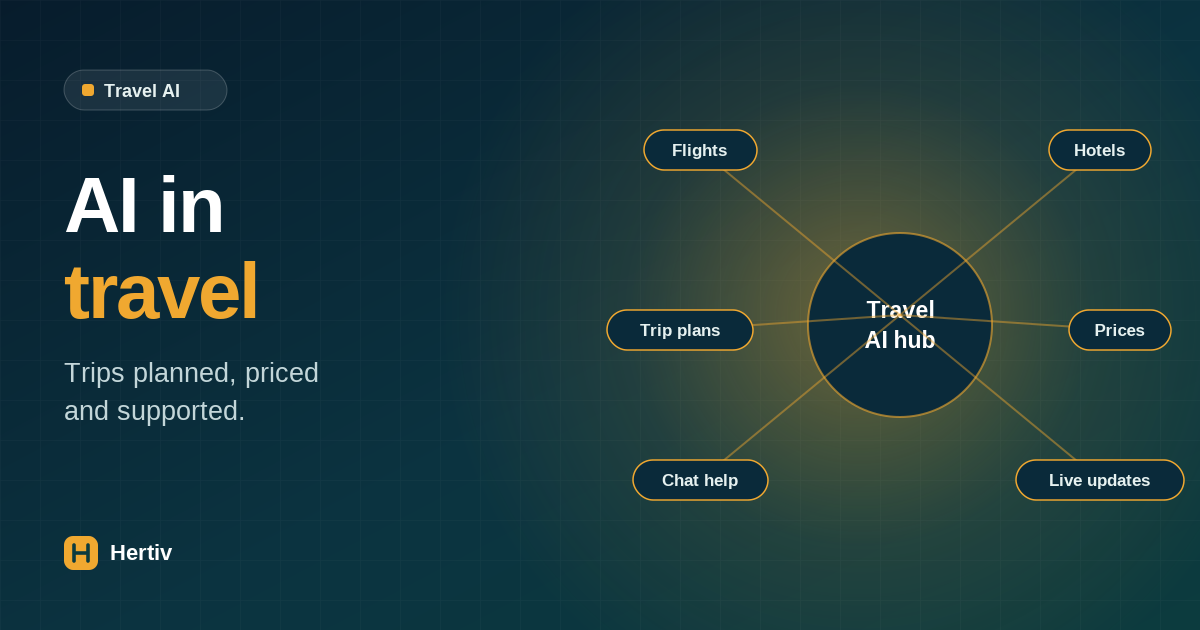
AI in travel and tourism plans trips, sets prices, answers traveller questions and keeps operations moving. Here is where it helps, and where a human needs to check.
On this page
Short answer
AI is used across travel and tourism to plan trips, recommend places, set room and flight prices, answer traveller questions, translate messages and spot problems in operations. Airlines, hotels, online travel agencies and tour operators use it to handle routine work faster and to give each traveller a plan that fits their dates, budget and interests. People still check prices, safety information and bookings before money changes hands.
What is AI in travel and tourism?
AI in travel and tourism is the use of software that learns from booking data, reviews and traveller behaviour to help people plan trips and help travel businesses run their operations. It covers chatbots that answer questions, systems that suggest trips, tools that set prices, and models that forecast demand.
The work falls into two halves. The first is what travellers see: trip ideas, personalised offers, instant answers and smooth check-in. The second is what happens behind the scenes: staffing, pricing, baggage handling, maintenance and fraud checks. Both halves run on the same data, which is why a hotel that knows its booking patterns can price rooms better and staff the front desk better at the same time.
AI does not replace the travel business. It takes over the routine parts of planning and operations so staff can spend their time on the parts that need judgement, such as a complicated itinerary or a traveller in difficulty.
Where do travellers meet AI?
Travellers meet AI at almost every step of a trip, often without noticing it. The table below shows the main touchpoints and what the software does at each one.
| Step of the trip | What AI does | What the traveller sees |
|---|---|---|
| Searching and planning | Suggests trips from dates, budget and past travel | A shortlist of places and routes |
| Booking | Checks availability and compares options | Clear prices and room or seat choices |
| Before departure | Answers questions and sends reminders | Chat replies and check-in prompts |
| During the trip | Translates signs and messages, reroutes plans | Local tips and live updates |
| After the trip | Asks for feedback and spots problems | A short review request |
The common thread is that AI handles the repeated questions and the sorting work. A traveller with a simple question gets an instant answer, and staff are free for the questions that need a real conversation.
How does AI help with trip planning?
AI helps with trip planning by turning a vague request into a concrete plan. A traveller says where they want to go, when, and what they like, and the system builds an itinerary from flights, hotels, activities and travel times, then adjusts it when something changes.
Good planning tools work from real data: opening hours, travel times, prices and reviews, not from guesses. They ask follow-up questions when the request is unclear, such as whether the traveller wants a quiet beach or a busy city, and they show the trade-offs, like a cheaper hotel that adds an hour of travel each day.
The limits matter. A planning assistant can miss a closed attraction, a local holiday or a long transfer, so travellers should check the key facts before booking. Our guide to generative AI in travel explains where these tools help most and where they still need a human check.
How does AI set prices and availability?
AI sets prices in travel by watching demand, dates, events and competitor prices, then adjusting room rates and fares as conditions change. A hotel room costs more on a weekend with a big event in town and less on a quiet Tuesday, and the system updates the price as bookings come in.
Behind the price is a forecast: how many rooms or seats are likely to sell, at what price, and how far ahead people book. Predictive analytics in travel uses past booking patterns to answer those questions, so a hotel can hold a few rooms back for late bookers instead of selling everything early at a low price.
Travellers benefit when prices match real demand, but they should know that prices move. The same room can cost a different amount in the morning and the evening, and a price shown to one person may differ from the price shown to another. Clear pricing rules and honest display matter more than clever pricing.
How does AI help traveller support?
AI helps traveller support by answering the questions that come up again and again: where is my booking, can I change my flight, what time does the hotel check-in open, and what is the cancellation policy. A chatbot or voice assistant can answer these in seconds, in the traveller's language, at any hour.
The best support systems know when to hand over. A missed connection, a medical problem or a lost passport needs a person, and a good system passes the full conversation history to that person so the traveller does not have to repeat everything. If you want the wider picture, read our guide on using AI in customer service.
Support AI also works before a problem appears. It can warn a traveller about a delayed flight, suggest an earlier check-in, or remind them about visa rules for their destination. These small, timely messages prevent many of the calls that support teams used to receive.
What happens behind the scenes?
Behind the scenes, AI helps travel businesses run their operations: forecasting demand, rostering staff, maintaining aircraft and vehicles, handling baggage and spotting fraud. These jobs rarely reach the traveller directly, but they decide whether a trip runs smoothly.
Airlines use AI to plan crew rosters and maintenance, so a delayed aircraft does not strand a whole day of flights. Hotels use it to forecast which days will be busy and to schedule cleaning and front-desk staff. Tour operators use it to spot which trips sell out and which need a price change or a different route.
Computer vision also plays a role in airports and hotels, from reading documents at check-in to spotting safety issues on the ground. Our guide to computer vision in travel covers where cameras and AI work together, and where privacy rules limit them.
Example: a small travel agency adds an AI assistant
Example (hypothetical): a travel agency with four staff answers about 200 enquiries a week, each taking around 6 minutes, which is 200 x 6 = 1,200 minutes, or 20 hours a week. The team wants to answer faster without hiring, so it adds an AI assistant that drafts replies from its booking data and price lists.
The assistant drafts answers for 150 of the 200 enquiries, and staff review each draft in 2 minutes, which is 150 x 2 = 300 minutes, or 5 hours a week.
The other 50 enquiries are complex, so staff handle them fully at 6 minutes each, which is 50 x 6 = 300 minutes, or 5 hours a week. Total time is 5 + 5 = 10 hours a week, saving about 10 hours a week.
The agency keeps two rules: the assistant never quotes a price it cannot check against the live system, and every message about a booking change goes to a person. After a month, the team reviews which drafts needed fixes and updates the assistant's instructions, so the same mistakes do not repeat.
What are the common mistakes?
The most common mistakes in travel AI are trusting the system with facts it cannot verify, hiding the handoff to a person, and pricing in ways travellers cannot understand.
- Letting AI invent prices or times. A planning assistant that guesses a price or a flight time will book a traveller into a trip that does not exist.
- No human handoff. A chatbot that keeps a stranded traveller in a loop instead of passing them to a person does real damage.
- Opaque pricing. Prices that move without explanation make travellers distrust the booking, even when the price is fair.
- Ignoring local rules. Visa rules, safety advice and local laws change often, and an AI trained on old data will give old answers.
- Collecting data without a purpose. Traveller data should be kept only for a clear use, with a clear deletion plan.
Key takeaways
- AI in travel covers planning, pricing, support and operations, not just chatbots
- Trip planning tools work best when they use live prices, times and opening hours
- Dynamic pricing follows demand, so travellers should expect prices to move
- Good support AI answers routine questions fast and hands complex cases to people
- Behind the scenes, AI forecasts demand, rosters staff and spots fraud
- Never let AI confirm a booking or a price without a live system check
Frequently asked questions
Does AI plan trips better than a travel agent?
AI plans routine trips faster, because it can compare many options in seconds. A travel agent is better for complex trips, such as multi-country routes, special needs or unusual budgets, where judgement and local knowledge matter more than speed.
Can AI find cheaper flights and hotels?
It can find prices that match current demand and compare many options quickly, which often surfaces a cheaper combination. Prices still move with demand, so the cheapest option today may not be the cheapest tomorrow, and travellers should check before booking.
Will AI replace travel agents?
No. AI takes over repeated tasks such as answering common questions and drafting itineraries. Agents still handle complex trips, problems during travel, and travellers who want advice from a person they trust.
Is my data safe with travel AI tools?
Travel tools collect dates, destinations, payment details and sometimes passport information, so they should explain what they keep, why, and for how long. Use tools from companies with clear privacy policies, and avoid sharing passport numbers in a chatbot.
What is the biggest risk of AI in travel?
The biggest risk is wrong facts: a price, a time or a rule that looks right but is out of date. The fix is simple: check prices, times and travel rules against the live booking system or the official source before paying.
How should a small travel business start with AI?
Start with one repeated task, such as answering common questions or drafting itineraries, and measure the time saved and the errors caught. Keep a person checking every price and booking, and expand only after a month of clean results.


