AI Fraud Detection in Australia: How Banks Spot Scams
Australian banks use AI to watch transactions, flag scams and meet AUSTRAC duties. Here is how the checks work and what makes the Australian setting different.
On this page
Short answer
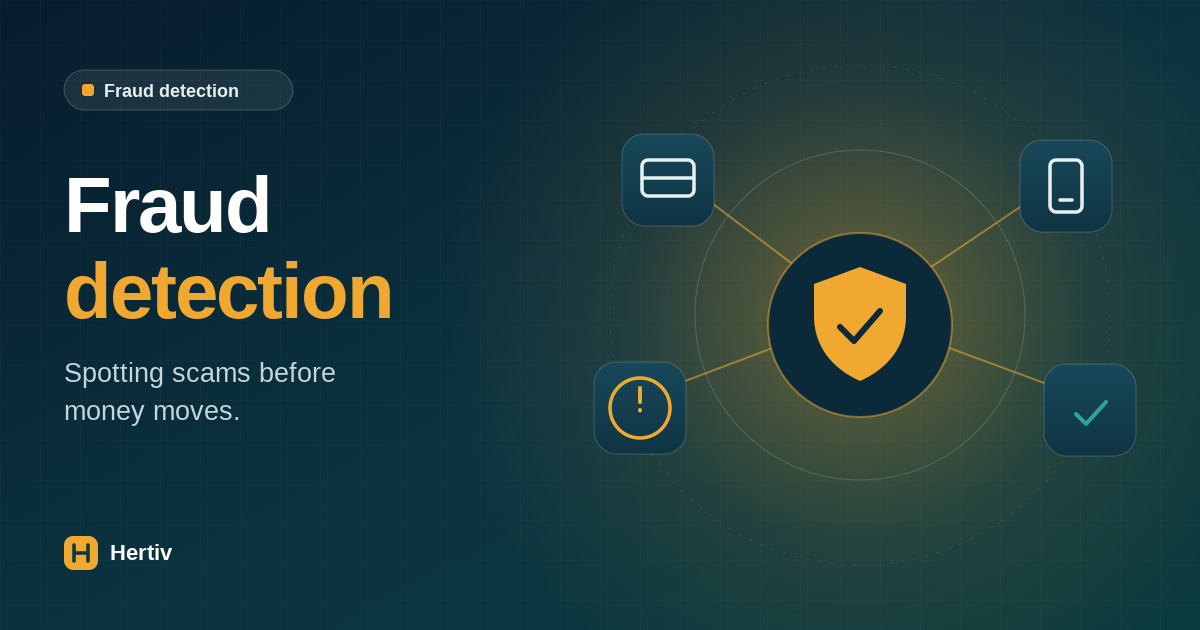
AI fraud detection in Australia is the use of machine learning to watch payments, logins and applications for signs of fraud, tuned to Australian payment rails and rules. Banks and payment firms score transactions in real time, flag unusual patterns for review, and report suspicious matters to AUSTRAC. The Australian setting adds real-time payments, scam reporting duties and strong privacy rules to the design.
What is AI fraud detection in Australia?
AI fraud detection in Australia is the use of machine learning to watch payments, logins and new applications for signs of fraud, tuned to how Australians actually pay. Instead of fixed rules alone, models learn what normal behaviour looks like for each customer and flag transactions that break the pattern.
The models watch several kinds of fraud at once. Card fraud, investment and romance scams, account takeovers, money mule accounts and fake applications each leave different traces, and a single transaction can be checked against all of them in one pass.
| Fraud type | What the AI watches | Typical response |
|---|---|---|
| Card fraud | Unusual location, amount, merchant | Decline or step-up check |
| Scams | New payee, urgent transfers | Warning and cooling-off pause |
| Account takeover | New device, odd login time | Extra verification step |
| Mule accounts | Rapid in-and-out payments | Hold and review |
| Fake applications | Mismatched identity details | Manual review |
The goal is not to block every unusual payment. It is to catch the small share that is fraud while letting genuine payments through without friction, which is why fraud detection using machine learning is tuned for a balance between catching fraud and avoiding false alarms.
How do Australian banks use AI to spot fraud?
Australian banks use AI to spot fraud by scoring each transaction as it happens and comparing it with what that customer normally does. A payment that fits the customer's history passes in milliseconds, while one that breaks the pattern gets a closer look.
The score draws on several signals at once. The amount, merchant and time are compared with past behaviour, the device and location are checked against the customer's usual setup, and the payee is checked against known scam accounts and mule networks shared across the industry.
Behaviour adds a second layer. Models watch how a customer types, taps and navigates, because a fraudster who has stolen a password still behaves differently from the account holder. Velocity matters too: several new payees or large transfers in a short window raise the score more than any single payment would.
When the score crosses a threshold, the bank acts. Low-risk flags get a warning in the app, medium-risk ones ask for extra verification, and high-risk ones are held for a human analyst. The analyst's decision feeds back into the model, so the system learns from every case it gets wrong.
What makes Australia different?
Australia is different because payments move in real time, scam reporting is a shared duty, and privacy law shapes what data can be used. Those three facts change how fraud systems are built here.
Real-time payments through the New Payments Platform mean money can leave an account and be withdrawn within seconds, so there is no batch window to catch a bad payment. Scoring has to happen before the payment clears, which pushes teams toward fast models and pre-approved payee lists.
Reporting duties add a second layer. Banks must report suspicious matters to AUSTRAC, and scam reports flow to the National Anti-Scam Centre, so detection is tied to regulatory reporting rather than treated as a purely internal matter. Shared intelligence across banks also means a mule account flagged at one bank can be watched at others.
Privacy rules set the limits. The Privacy Act governs how personal data is collected and shared, so teams must justify each data source they feed a model and keep decisions explainable when a customer asks why a payment was stopped.
How does a transaction get scored?
A transaction gets scored by passing through a chain of checks in a fraction of a second, with each check adding to a risk score that decides what happens next. The chain runs before the payment clears.
- Collect the facts. The system gathers the amount, payee, device, location and the customer's recent history.
- Check the lists. The payee and device are compared with scam accounts, mule networks and blocked identifiers.
- Score the behaviour. A model compares the transaction with the customer's normal pattern and returns a risk score.
- Apply the rules. Business rules add context the model cannot see, such as a known outage or a product launch.
- Decide the action. Low scores pass, mid scores ask for verification, high scores are held for review.
- Record the outcome. The decision, the score and the analyst's verdict are logged for audit and for retraining.
The score is not a verdict on the customer. It is a measure of how far this transaction sits from normal, and the action it triggers is sized to match, so a first-time large payment gets a check rather than a block.
Where else is AI used against fraud in Australia?
AI is used against fraud across Australian finance, not only in card payments. Insurers, superannuation funds, tax advisers and telecom firms each run their own checks, and the patterns overlap more than the industries differ.
Insurers use models to spot claims that do not fit the pattern: a claim filed days after a policy starts, repair quotes far above the norm, or the same phone number appearing across unrelated claims. Superannuation funds watch for early-release scams and identity theft targeting member accounts.
Telecom firms watch for SIM swap fraud, where a criminal takes over a phone number to intercept one-time codes. A SIM change followed quickly by password resets and large transfers is a strong signal, and banks and telcos share intelligence on it.
Government services face application fraud at scale, from fake benefit claims to stolen identities used to open accounts. Here the models check document consistency and cross-reference identity details, with humans reviewing the cases the model cannot resolve. The same agent pattern appears in fraud detection AI agents that triage alerts before a human sees them.
Teams that want the analytic view can read analytics for fraud detection in finance for how the numbers behind the scores are built and tracked over time.
What are the limits and risks?
AI fraud detection has real limits, and the biggest is the false positive: a genuine payment flagged as fraud. Too many false alarms push customers to other banks and train staff to wave alerts through, which defeats the system.
Bias is a second risk. A model trained mostly on one group's behaviour can flag other groups more often, for example customers who travel, send money overseas or use shared devices. Teams need to test detection rates across customer groups, not only overall accuracy.
Fraudsters adapt. Once a check becomes known, criminals change tactics: smaller amounts, slower patterns, new payee types. Models that are not retrained on fresh cases drift, and their catch rate falls while false alarms stay high.
Privacy and explanation matter too. A customer whose payment is stopped deserves a reason in plain language, and regulators expect decisions to be explainable. A model that cannot say why it flagged a transaction creates a compliance problem even when its accuracy looks good.
Example (hypothetical): a mid-size bank checks half a million card payments a day
Example (hypothetical): a mid-size Australian bank processes 500,000 card payments a day and scores each one with its fraud model. The model flags 0.2 percent of payments for review, which is 500,000 times 0.002, giving 1,000 flagged payments a day.
Analysts review those 1,000 payments and confirm 150 as fraud, leaving 850 false alarms. That means 7 in 10 flagged payments are genuine, which is normal for fraud systems: the cost of missing a scam is higher than the cost of checking a good payment.
Each review takes about 3 minutes, so 1,000 reviews times 3 minutes gives 3,000 minutes, or 50 hours of analyst time a day. The bank staffs the queue across the day and tunes the threshold weekly: if false alarms rise, it raises the bar for flagging; if fraud slips through, it lowers it.
What are the common mistakes?
The most common mistakes in Australian fraud detection are chasing accuracy alone, ignoring the customer experience, and letting models go stale.
- Optimising for accuracy only. A model can be accurate while missing the fraud that matters; track the catch rate and the false alarm rate separately.
- Blocking first-time behaviour. A customer's first large payment or first overseas transfer is often genuine; verify it instead of blocking it.
- No feedback loop. If analysts' verdicts never reach the model, it keeps making the same errors.
- Ignoring real-time payments. Checks designed for batch card clearing fail when money moves in seconds.
- Weak explanations. Customers and regulators need a plain reason when a payment is stopped.
- Forgetting mule networks. Single-account checks miss fraud that moves through chains of accounts.
Key takeaways
- AI fraud detection scores each payment against the customer's normal behaviour in real time
- Real-time payments in Australia mean checks must run before the money clears
- AUSTRAC reporting and scam intelligence sharing shape how systems are built
- False alarms are normal: the catch rate and the false alarm rate must be tracked separately
- Models drift as fraudsters adapt, so retraining and threshold reviews are routine work
Frequently asked questions
Why do Australian banks flag genuine payments as fraud?
Because the models are tuned to catch fraud, and genuine payments that break a customer's normal pattern look similar to fraud. A first overseas transfer or a large payment to a new payee often triggers a check. Verification, not a block, is the usual response.
What is AUSTRAC's role in fraud detection?
AUSTRAC is Australia's financial intelligence agency. Banks and payment firms must report suspicious matters to it, and AUSTRAC shares intelligence back with the industry. Detection systems are therefore built with reporting in mind, not as a purely internal tool.
How do banks share scam intelligence in Australia?
Banks share information about scam accounts, mule networks and blocked identifiers through industry channels, and scam reports flow to the National Anti-Scam Centre. A mule account flagged at one bank can then be watched at others.
Can AI stop scams before the money leaves?
It can slow them down. Real-time scoring, warnings in the app and cooling-off pauses give customers a chance to reconsider, but no system catches every scam. Customer awareness and reporting remain part of the defence.
Does AI fraud detection use my personal data?
Yes, it uses transaction history, device and location data, and sometimes behaviour signals. The Privacy Act governs how that data is collected, shared and kept, and banks must be able to explain why a payment was stopped.
How often should a fraud model be retrained?
There is no fixed schedule, but most teams retrain on fresh cases regularly and review thresholds weekly or monthly. Fraudsters change tactics, so a model trained months ago will miss new patterns while its false alarms stay high.