AI for Dealership Lead Management: Faster Replies, More Test Drives
AI for dealership lead management scores each enquiry, replies within minutes and books test drives while the buyer is still deciding.
On this page
Short answer
AI for dealership lead management is software that reads each sales enquiry, scores how ready the buyer is, sends a fast first reply and keeps the follow-up going until a test drive is booked. It sits between the lead sources and the sales team, so no enquiry waits for someone to notice it.
What is AI for dealership lead management?
AI for dealership lead management is software that takes in every sales enquiry, works out how serious the buyer is, and moves the lead toward a test drive without waiting for a salesperson to pick it up first. It connects the website, marketplaces, chat and phone to one queue that the sales team works from.
A dealership can receive leads from many places at once: its own website, car marketplaces, social media, walk-in follow-ups and finance applications. Without a system, the fast leads get answered and the slow ones sit in an inbox. AI sorts the queue so the hottest buyers get attention first and nobody is forgotten.
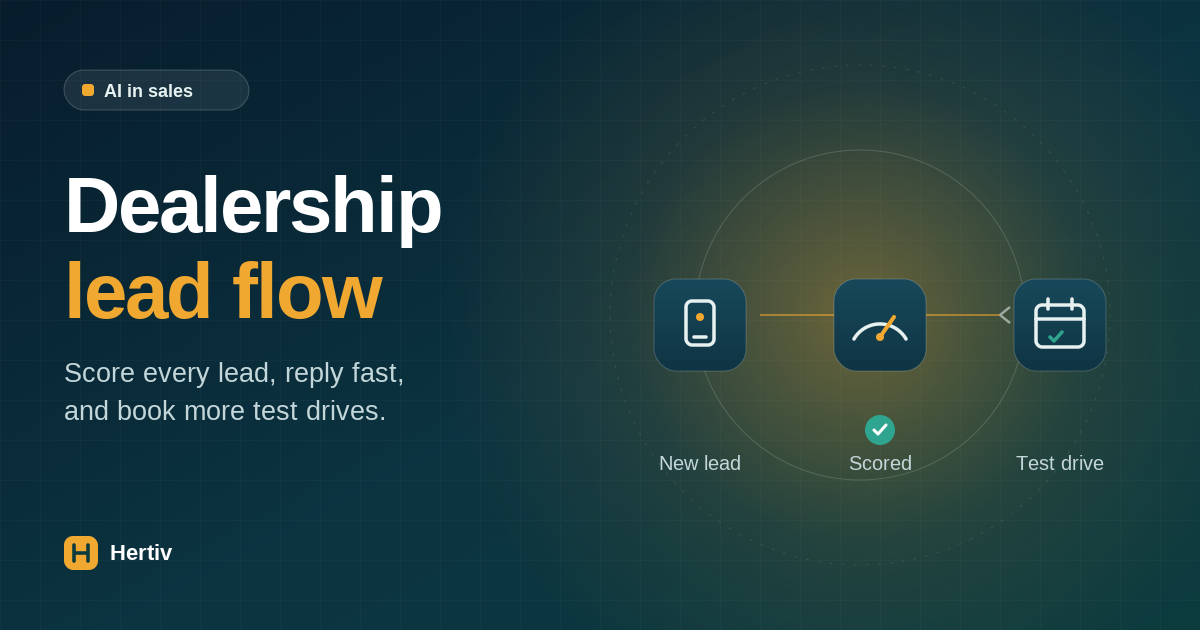
The system does three jobs. It scores each lead by intent, such as whether the buyer asked about a specific car, a price or a trade-in. It drafts a first reply in minutes, not hours. And it schedules follow-ups and test drives, then hands the buyer to a salesperson at the right moment. For the broader pattern, see AI in lead management.
Where do dealership leads come from?
Dealership leads come from more sources than most teams track, and each source behaves differently. A buyer who fills in a form for one specific car is closer to a sale than someone who clicked an ad and left an email address.
| Lead source | What the buyer did | Typical intent |
|---|---|---|
| Website form | Asked about one car or a price | High |
| Marketplace listing | Messaged about a listed car | High |
| Live chat | Asked about stock or finance | Medium to high |
| Social media ad | Left contact details | Medium |
| Phone call | Called about a car or a trade-in | High |
| Service visit | Existing customer in the workshop | Medium |
AI reads the same details a salesperson would: the car, the budget, the trade-in, the location and the time of the enquiry. It then puts the lead in the right order and suggests the next step, such as a call, a price message or a test-drive slot.
How does AI score and sort a lead?
AI scores a lead by weighing the signals in the enquiry against what past buyers did. A buyer who named a car, gave a budget and asked about finance scores higher than one who only left a name and an email address.
Common scoring signals include the specific model mentioned, whether the buyer asked about price or monthly payments, whether a trade-in was mentioned, how close the buyer lives to the dealership, and how quickly they replied to the first message. Each signal adds or removes points, and the total decides the order in the queue.
Sorting also matters for timing. A high-intent lead that arrived at 9 pm should be first in the morning, not buried under a dozen low-intent forms. The sales team then works the queue top to bottom instead of guessing which enquiry matters most.
How does AI handle the first reply?
AI handles the first reply by drafting a message that answers the buyer's actual question, using the car's details, price and availability from the dealership's own stock list. The reply goes out within minutes, even outside opening hours.
A good first reply does three things: it confirms the car is available, it answers the question asked, and it offers a clear next step, such as a test drive time or a call. It does not push a sale or invent details about the car. Anything the system does not know should be flagged for a person, not guessed.
Speed matters because buyers contact several dealerships at once. The first helpful reply often wins the test drive. A reply that arrives the next morning usually finds the buyer already booked elsewhere. That is the main return on the system: faster first contact, not cleverer wording. For teams that want the follow-up itself automated, AI agents for sales teams cover the handoff design.
What does AI do after the test drive?
After the test drive, AI keeps the follow-up going by reminding the salesperson what the buyer cared about, drafting a short follow-up message, and suggesting the next step, such as a finance quote or a trade-in valuation.
Buyers rarely decide on the day. They compare prices, check insurance, and talk it over at home. The follow-up is where most deals are won or lost, and it is also where busy sales teams drop the thread. AI watches for silence: if a buyer has not replied in two days, it flags the lead and drafts a nudge based on the last conversation.
The system can also spot trade-in and service opportunities. A buyer who mentions an old car gets a valuation step. A customer who bought a car two years ago can be reminded about a service or an upgrade. Used this way, the same lead system supports repeat business, not just first sales. See AI in CRM for how customer records feed this.
How to start with AI in a dealership
You start with AI in a dealership by fixing the lead queue first, then adding replies and follow-ups one step at a time. A small pilot on one sales team is enough to learn what works.
- List every lead source. Website, marketplaces, chat, phone and service visits, with who handles each one today.
- Connect them to one queue. Every enquiry lands in the same place, with the car, the question and the time attached.
- Define scoring. Agree which signals mean high intent, such as a named car, a budget or a trade-in, and set the order.
- Draft the first replies. Write templates for the five most common questions, using real stock and price data.
- Set the handoff rule. Decide exactly when AI hands the buyer to a salesperson, such as when a test drive is requested.
- Measure for a month. Track reply time, test drives booked and sales, then compare with the month before.
Keep a person in charge of the queue every day. AI can sort and draft, but someone must own the follow-up when a buyer goes quiet or a reply needs a human answer.
Example (hypothetical): a 40-car-a-month dealership
Example (hypothetical): a dealership sells about 40 cars a month and receives 300 leads a month. By hand, the team answers 180 of them within the hour and the rest the next day. Of the 180 answered quickly, 40 book a test drive and 8 buy, since about one in five test drives turns into a sale.
With AI, all 300 leads get a reply within five minutes. Of those 300, 90 book a test drive, which is 30 in every 100 leads. At the same one-in-five rate, 90 test drives turn into 18 sales, which is 10 more than the 8 the team closed by hand.
The time saving is real too. Answering 180 leads by hand at 10 minutes each takes 30 hours a month. Reviewing AI drafts takes about 2 minutes each, so 300 leads take 10 hours, saving 20 hours a month for the sales team to spend on test drives and follow-ups.
What are the common mistakes?
The most common mistakes are letting AI invent car details, replying with no handoff to a person, and scoring leads on the wrong signals.
- Invented stock or prices. If the system guesses a price or says a car is available when it is not, the buyer loses trust on the first message.
- No handoff rule. AI should hand over when the buyer asks for a test drive, a finance quote or a trade-in value, not keep chatting.
- Scoring on message length. Long messages are not better leads; a named car and a budget are the signals that count.
- One reply for every source. A marketplace enquiry needs a different first reply from a website form, because the buyer already saw the listing.
- Nobody owns the queue. If no one checks the flagged leads each day, the system quietly stops helping.
Key takeaways
- AI scores dealership leads by intent, so the hottest buyers get attention first
- A fast first reply wins the test drive, because buyers contact several dealers at once
- Follow-up after the test drive is where most deals are won or lost
- Scoring should use behaviour, such as a named car and a budget, not message length
- AI drafts and sorts; a person must own the queue and the handoff
Frequently asked questions
How fast should a dealership reply to a lead?
Within minutes, not hours. Buyers usually contact several dealerships at once, and the first helpful reply often wins the test drive. A reply that arrives the next morning usually finds the buyer already booked elsewhere.
Can AI answer questions about a specific car?
Yes, when it reads from the dealership's own stock list, including price, mileage and availability. It should never guess a price or claim a car is in stock when the data says otherwise. Unknown details go to a person.
Does AI replace the sales team?
No. It handles sorting, first replies and follow-up reminders, and hands the buyer to a salesperson when a test drive, finance quote or trade-in is requested. The conversation and the close stay human.
What data does the system need to start?
It needs the lead sources connected, the stock list with prices, and the common questions buyers ask. A month of past leads helps set the scoring, but a small dealership can start with agreed rules instead.
How do you measure whether it is working?
Track reply time, the share of leads that book a test drive, and sales per month, then compare with the month before the system went live. If test drives rise but sales do not, the follow-up after the drive needs work.
What about leads that arrive at night?
AI replies within minutes at any hour, which is one of its main benefits. The reply answers the question and offers a test-drive time, and the salesperson picks the lead up first thing in the morning.