AI Chatbots in Real Estate: What They Do for Agents
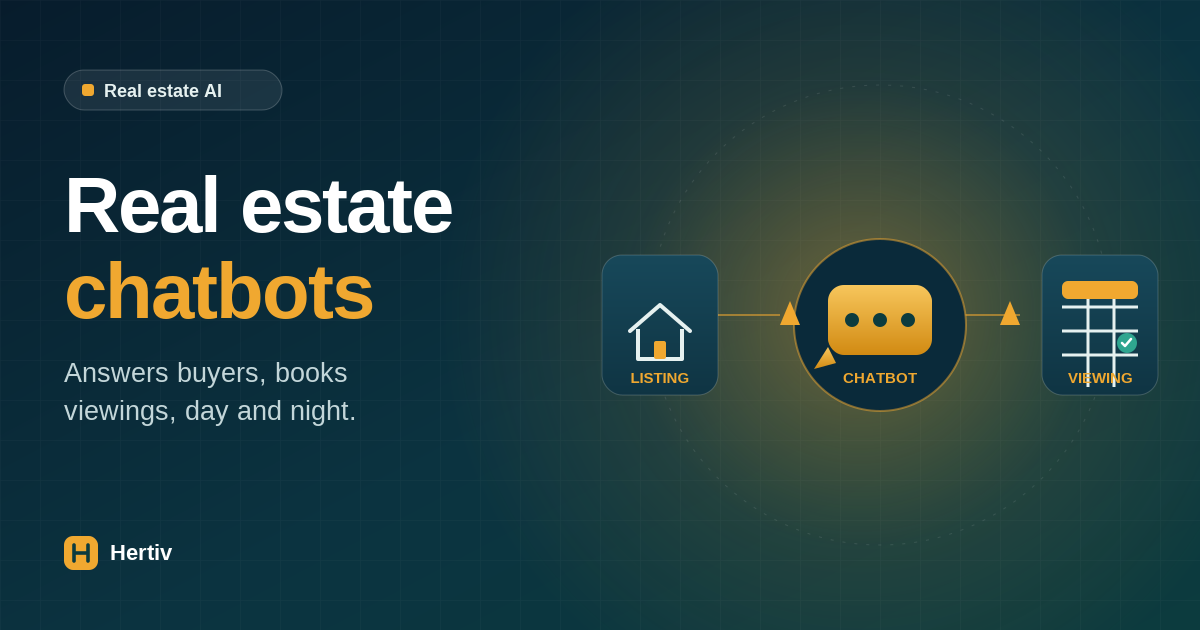
AI chatbots in real estate answer buyer questions, qualify leads and book viewings day and night. Here is what they do well, where they fall short, and how to start.
On this page
Short answer
An AI chatbot in real estate is a chat assistant on a listing site or messaging app that answers buyer questions, collects contact details, qualifies leads and books viewings without an agent present. It works from the listing data and a set of rules, and it hands the conversation to a human agent when the buyer is ready or the question needs judgement.
What is an AI chatbot in real estate?
An AI chatbot in real estate is a chat assistant on a listing site or messaging app that answers buyer questions, collects contact details, qualifies leads and books viewings without an agent present. It works from the listing data and a set of rules the agency writes, and it hands the conversation to a human agent when the buyer is ready or the question needs judgement.
Most buyers browse outside office hours, so the chatbot's main job is to catch the enquiry while the buyer is still interested. A reply in seconds keeps the conversation alive; a reply the next morning often finds the buyer already talking to another agent.
| What the chatbot does | Example | Needs a human? |
|---|---|---|
| Answer listing questions | Is the flat available in June? | No |
| Collect contact details | Name, phone, budget range | No |
| Qualify the lead | Budget, timeline, area | No |
| Book a viewing | Pick a slot in the agent calendar | No |
| Negotiate price | Will the seller take 5% less? | Yes |
| Handle a complaint | The viewing was cancelled | Yes |
The chatbot is a front door, not a replacement for the agent. Its value is speed and coverage; the agent's value is judgement, local knowledge and negotiation. AI chatbot development covers the build and handoff design in more depth.
What questions can a real estate chatbot answer?
A real estate chatbot answers the questions buyers ask first: price, size, rooms, location, availability, transport links, service charges and viewing times. These answers come straight from the listing data, so the chatbot is reliable as long as the listing is kept up to date.
It can also handle the follow-ups that follow from those answers: whether pets are allowed, what the deposit is, how the viewing works, and what documents a buyer should bring. Questions it should not answer are the ones that need judgement — whether a price is fair, whether an area is a good investment, or whether a buyer should make an offer.
The rule is simple: facts from the listing are safe, opinions and advice belong to the agent. Write the chatbot's answer set from real enquiry logs, not from guesses about what buyers might ask. AI in real estate shows how the wider toolset fits around the chatbot.
How does chatbot lead qualification work?
Lead qualification is a short set of questions the chatbot asks in order: budget, timeline, preferred area, must-have features, and whether the buyer needs finance or has a property to sell. Each answer is scored against rules the agency sets, so a buyer who matches the criteria is flagged as ready to talk.
The handoff matters as much as the questions. A qualified lead reaches the agent with a short summary — what the buyer wants, what they asked, and which listings they viewed — so the agent calls with context instead of starting cold. A lead that does not match yet gets helpful information and a reason to return, not a dead end.
Keep the question set short. Every extra question loses buyers, so ask only what changes the next step. Five questions that decide the handoff beat ten that only feed a report nobody reads.
How do chatbots book viewings and follow up?
Booking works by connecting the chatbot to the agent's calendar and the listing's available slots. The buyer picks a time, the chatbot confirms it, and both sides get a reminder before the viewing. If the slot is taken, the chatbot offers the nearest alternatives instead of leaving the buyer to try again.
Follow-up is where most of the value sits. The chatbot sends a reminder the day before, asks after the viewing whether the buyer wants a second look, and collects the reason when a buyer drops out. That feedback tells the agent whether the price, the property or the timing is the problem.
The follow-up messages should come from the agency, not feel like a machine chasing a sale. One reminder and one check-in is enough; more than that pushes buyers away. AI and tokenization for real estate covers the wider services around listings and transactions.
What data and systems does a real estate chatbot need?
A real estate chatbot needs three things to work: the listing feed, the agent calendar, and a CRM to store the lead. The listing feed should be the same one the website uses, so the chatbot and the listing page never disagree about a price or a viewing slot.
The CRM link is what turns chats into pipeline. Every qualified lead should arrive with the chat history attached, so the agent sees the questions and answers before calling. Without that link, the chatbot creates work instead of saving it.
Start with one channel — the listing site or one messaging app — and add more only when the first one works. Each new channel needs the same answer set and the same handoff rules, or buyers get different answers in different places.
Example (hypothetical): a small agency's first month with a chatbot
Example (hypothetical): a small agency with 40 listings adds a chatbot to its website. In the first month it handles 400 chats. Of those, 120 buyers answer the qualification questions fully, which is 30% of 400. Half of the qualified buyers book a viewing, which is 60 viewings.
Each viewing the chatbot books saves the agent about 10 minutes of phone calls and messages, so 60 viewings save 600 minutes, which is 10 hours in the month. The agency spends the saved time on the viewings themselves and on follow-up calls with the buyers who booked.
The chatbot also collects the reason when 40 buyers drop out after qualification, and the most common reason is price. The agency uses that to review its pricing on five listings, which is the kind of feedback a phone log rarely produces.
What are the common mistakes?
Most chatbot failures in real estate come from stale data and unclear handoffs, not from the chatbot itself. The fixes are process fixes, and they are cheap to make before launch.
- Letting the chatbot answer pricing and legal questions it should pass to an agent.
- Feeding it stale listing data, so it quotes a price that no longer applies.
- Asking ten qualification questions when five would decide the handoff.
- No CRM link, so qualified leads sit in a chat log nobody reads.
- Sending too many follow-up messages and pushing buyers away.
- Launching on five channels at once with different answers on each.
Key takeaways
- A real estate chatbot answers, qualifies and books — it does not negotiate or advise
- Facts from the listing are safe for the chatbot; opinions and advice belong to the agent
- Five qualification questions that decide the handoff beat ten that feed a report
- The CRM link is what turns chats into pipeline
- Start on one channel and expand only when it works
Frequently asked questions
Can a chatbot replace a real estate agent?
No. A chatbot handles the first contact — answering common questions, collecting details and booking a viewing — but pricing advice, negotiation and the final decision still need a human agent. Buyers also expect a person when the question involves money, legal terms or a property with a problem the listing does not show.
What listings data does the chatbot need?
It needs the listing basics: price, size, rooms, location, availability and photos, plus the rules for what it may say about fees, offers and timelines. The data should come from the same feed the website uses, so the chatbot and the listing page never disagree about a price or a viewing slot.
How does a chatbot qualify a lead?
It asks a short set of questions — budget, timeline, area, must-haves and whether the buyer needs finance — then scores the answers against rules the agency sets. A buyer who matches the criteria goes to an agent with a summary; one who does not gets helpful information and a reason to return later.
Do real estate chatbots work after hours?
Yes, that is one of their main uses. A chatbot answers at night and on weekends, when many buyers browse, and books the viewing into the agent's calendar for the next working day. The agent starts the morning with a list of qualified leads instead of a pile of missed calls and unanswered messages.
How much does a real estate chatbot cost to run?
Costs vary with the tool and the volume of chats, so check the vendor site for current pricing. Budget for the chatbot subscription, the time to write answers and rules, and the integration with your CRM and calendar. Most agencies start with one listing site and one messaging channel before expanding to more.
What should a chatbot never do?
It should never quote a price that differs from the listing, promise a viewing time it cannot book, or give legal or financial advice. It should also never collect sensitive personal data it does not need. Set clear handoff rules so anything uncertain goes to a human agent quickly, with the full chat history attached.


