How Much Does a Jewelry App Cost to Develop?
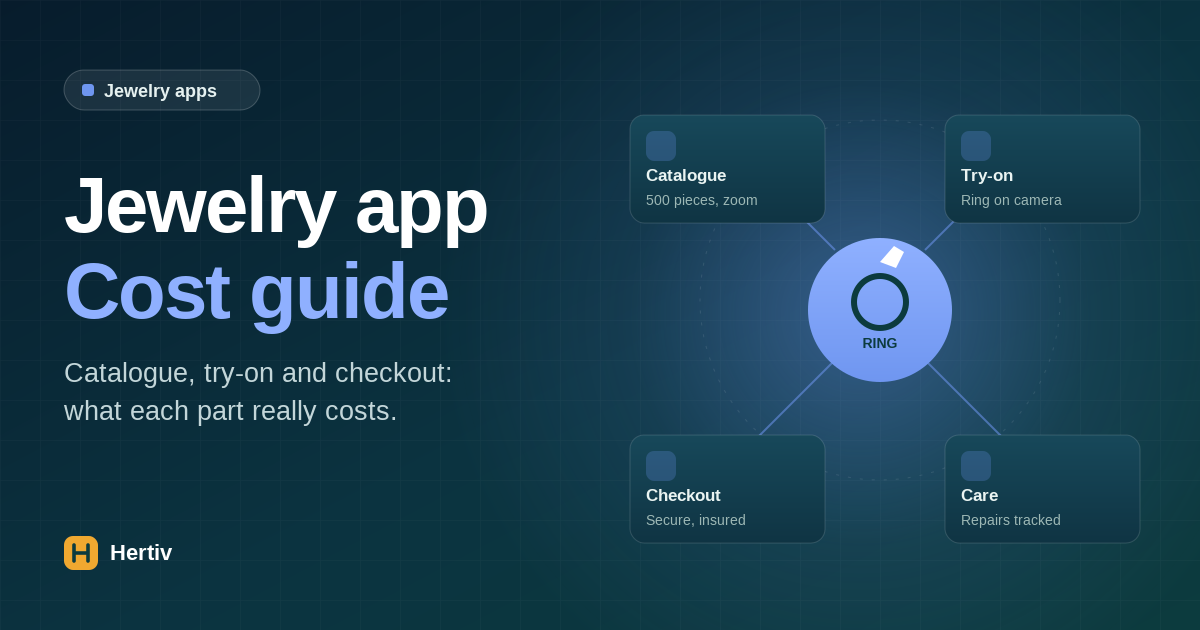
A jewelry app costs what its catalogue, try-on and checkout features demand. This guide breaks down the cost parts and the features buyers expect.
On this page
Short answer
A jewelry app costs as much as its features require: a catalogue with high-resolution images, search and filters, secure checkout, and order tracking form the core. Add-ons such as virtual try-on, custom ring builders and appointment booking raise the price. A first version with the core features is the sensible start, with try-on and personalisation added later.
What is a jewelry app?
A jewelry app is a mobile app that lets customers browse, customise and buy jewelry, and lets the jeweler manage orders, appointments and repairs. It combines a shop with the personal service a jewelry buyer expects: guidance on materials, sizing, certification and care.
Jewelry is different from most retail because purchases are high value, personal and often one-off. A buyer may spend weeks deciding, visit the store once, and expect the app to remember their taste. That shapes the features: strong imagery, clear pricing, trust signals and easy contact with a person matter more than discounts.
The app can serve one store, a chain or an online-only brand. A single store needs appointment booking and repair tracking; a chain needs stock visibility across branches; an online brand needs try-on and returns that work without a visit. The business model decides the feature list, and the feature list decides the cost. Teams scoping a first version usually start with mobile app development to map the scope before pricing it.
How much does a jewelry app cost to develop?
A jewelry app costs what its features demand. The table below shows the usual cost parts for a first version, using planning figures rather than quoted prices. Real quotes vary by region, team and complexity, so treat these as a budgeting shape, not a price list.
| Cost part | What it covers | Planning figure |
|---|---|---|
| Design | Product pages, checkout, brand feel | $12,000 |
| App build | iOS and Android, catalogue, search | $48,000 |
| Backend and admin | Stock, orders, customer records | $20,000 |
| Payments and security | Checkout, fraud checks, encryption | $6,000 |
| Testing and launch | Devices, fixes, store submission | $8,000 |
These parts add up to $94,000 for a first version: 12,000 plus 48,000 plus 20,000 plus 6,000 plus 8,000. Virtual try-on, a custom ring builder or appointment booking would add further cost, because each needs its own design, build and testing.
Running costs follow: hosting, payment fees, image storage and support. High-resolution jewelry photography needs generous storage and fast delivery, so the team should budget for a content delivery network from the start rather than adding one after launch.
Which features do jewelry buyers expect?
Jewelry buyers expect features that reduce doubt: clear images, honest pricing, certification details and a way to reach a person. The features below are the core of most jewelry apps.
- High-resolution catalogue. Multiple photos per piece, zoom, and video where possible. Jewelry is bought with the eyes, and poor images end the sale.
- Search and filters. By metal, stone, price, occasion and size, with results that load fast.
- Product detail pages. Materials, stone grades, certification, dimensions and care notes, written plainly.
- Secure checkout. Card and wallet payments, clear delivery and returns, and order tracking after purchase.
- Wishlist and saved pieces. Buyers compare over days or weeks, so the app must remember what they liked.
- Contact and appointments. A way to book a store visit or ask a question, with the conversation linked to the piece.
- Repair and care tracking. Status updates for repairs, resizing and cleaning, which bring buyers back after the sale.
These features form the first version. Everything else, from try-on to personalisation, is an addition that should wait until the core sells well.
Virtual try-on and custom ring builders
Virtual try-on and custom ring builders are the two features that set a jewelry app apart, and the two that cost most to build well.
Virtual try-on uses the phone camera to show a ring, necklace or earring on the buyer. It works best for rings, where the hand is easy to track, and less well for necklaces, where fit and drape are harder to render. The value is fewer returns and more confident buyers, but the result must look realistic or it damages trust.
A custom ring builder lets buyers pick a stone, setting, metal and engraving, then see the price change as they choose. The hard parts are live pricing, realistic rendering and a clear path from the builder to checkout. A builder that shows a price the store cannot honour is worse than no builder.
Both features should come after the core app is live and selling. Build them when you have real buyers asking for them, not before, because they are the most expensive parts to get right.
How to plan a jewelry app in 6 steps
You plan a jewelry app by starting with the catalogue and checkout, then adding the features that buyers actually ask for.
- Define the buyer and the sale. Is the app for engagement rings, everyday pieces or high jewelry? Each has different features and price points.
- List the core features. Catalogue, search, product detail, checkout, wishlist and appointments. Cut everything else for the first version.
- Plan the photography. Consistent, high-resolution images are the product. Budget for photography before the build, not after.
- Choose the payment and delivery setup. High-value orders need fraud checks, insurance and clear delivery promises.
- Build, test and launch the core. Test on real devices with real buyers, and fix the checkout before adding features.
- Add one feature at a time. Try-on or a ring builder comes next, measured by whether it lifts sales or cuts returns.
If the store already has a website, the app should reuse its catalogue and order system rather than building a second one. A shared backend keeps stock and prices consistent, which matters more than any single feature. Web app development work often shares the same backend as the mobile app.
Example (hypothetical): a first version for a single store
Example (hypothetical): a single jewelry store with 500 pieces in stock wants an app for browsing, appointments and online orders. The catalogue needs photography, the store needs an admin panel, and checkout must handle high-value orders.
The planning budget uses the table above: design $12,000, app build $48,000, backend and admin $20,000, payments and security $6,000, testing and launch $8,000. The total is $94,000, since 12,000 plus 48,000 is 60,000, plus 20,000 is 80,000, plus 6,000 is 86,000, plus 8,000 is 94,000.
The store adds a 10% reserve for fixes after launch, which is $9,400, bringing the first-year budget to $103,400. Virtual try-on is left out of the first version and planned for the second release, once the store sees whether online orders justify it.
The lesson is that the catalogue and checkout decide most of the cost. A clear feature list, agreed before the build, is what keeps the budget in check.
What are the common mistakes?
The most common mistakes in jewelry apps are weak photography, too many features in the first version, and checkout that does not fit high-value orders.
- Poor product images. Jewelry bought online lives or dies by its photos. Blurry or inconsistent images end sales before they start.
- Too many features at launch. Try-on, builders and loyalty schemes all sound good, but each delays the core app and adds risk.
- Checkout built for low-value retail. High-value orders need fraud checks, delivery insurance and clear returns, not a generic checkout.
- No appointment link. Many buyers want to see the piece in person. An app without booking loses them.
- Ignoring returns and repairs. After-sales service is where jewelry stores earn repeat business, so the app should track it.
- Forgetting photography costs. Shooting 500 pieces well is a real project with its own budget and timeline.
If you are scoping a jewelry app and want the budget tied to a real feature list, an MVP plan is the cheapest way to start.
Key takeaways
- A jewelry app costs what its features demand; the catalogue and checkout decide most of it
- High-resolution photography is the product, not a decoration
- Virtual try-on and ring builders belong in a later release, not the first
- High-value checkout needs fraud checks, insurance and clear returns
- Appointments and repair tracking bring buyers back after the sale
Frequently asked questions
How long does it take to build a jewelry app?
A first version with catalogue, search, checkout and appointments usually takes a few months, depending on catalogue size and photography. Virtual try-on or a custom ring builder adds more time, because each needs its own design, build and testing cycle.
Do I need virtual try-on in the first version?
No. Virtual try-on is valuable, but it is one of the most expensive features to build well. Launch the core app first, then add try-on once online orders show it is worth the cost. Rings suit try-on best, since the hand is easy to track.
How should a jewelry app handle payments?
Use a trusted payment provider with fraud checks, and make delivery and returns clear before the buyer pays. High-value orders may need extra verification and insured delivery, which should be priced into the checkout rather than added as a surprise.
What photos does a jewelry app need?
Each piece needs several high-resolution photos from different angles, plus a video where possible. Consistent lighting and background matter, because buyers compare pieces side by side. Budget for professional photography before the build starts.
Can one app serve both a store and online sales?
Yes, if both share the same catalogue, stock and order system. A shared backend keeps prices and availability consistent across channels, which matters more than any single feature. Appointments link the two, letting online buyers visit the store.
How do jewelry apps handle repairs and resizing?
The app should let customers request a repair, track its status and get notified when the piece is ready. Repair and care tracking brings buyers back after the sale and is one of the cheapest features to build relative to the loyalty it earns.


