Ecommerce Business Ideas: 8 Worth Starting Now
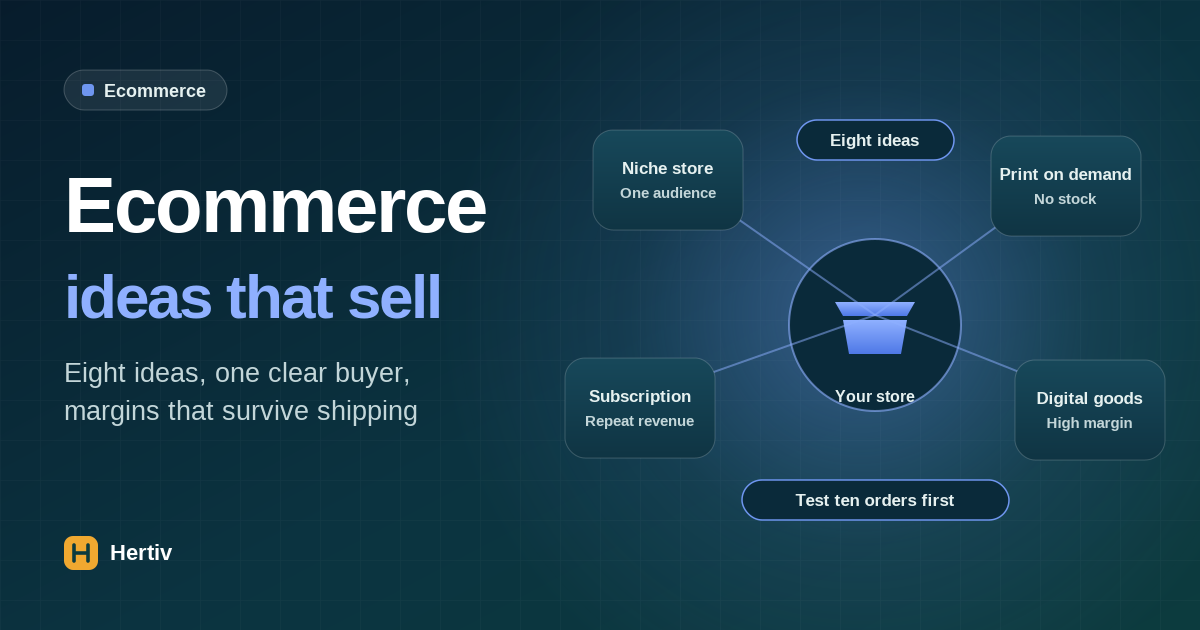
Ecommerce ideas that work share three traits: a clear buyer, a product you can source reliably, and a margin that survives shipping and ads. Eight to compare.
On this page
Short answer
The ecommerce business ideas most likely to work are a niche store, print on demand, a subscription box, digital products, dropshipping, a handmade shop, a B2B wholesale store or refurbished electronics. Each suits a different budget and skill set, so the right choice depends on who buys, what the margin is, and how much time you can give it.
Which ecommerce business ideas are worth starting?
The ecommerce business ideas worth starting are the ones with a clear buyer, a product you can source or make reliably, and a margin that survives advertising and shipping costs. A good idea is not the trendiest product; it is the one where you can name the customer and explain why they buy from you instead of a marketplace.
Use this comparison to shortlist. Start-up cost and effort are relative, and every idea below can be run as a side business before it becomes a full-time one.
| Idea | What you sell | Start-up cost | Effort |
|---|---|---|---|
| Niche online store | Curated products for one audience | Medium | Medium |
| Print on demand | Custom designs on shirts, mugs, posters | Low | Low to medium |
| Subscription box | Curated box delivered monthly | Medium | High |
| Digital products | Templates, guides, presets, courses | Low | Medium |
| Dropshipping | Products shipped by the supplier | Low | Medium |
| Handmade goods shop | Crafted items made by you | Low to medium | High |
| B2B wholesale store | Bulk supplies for other businesses | High | High |
| Refurbished electronics | Tested, repaired devices | Medium | High |
Pick one row and test it with a small range before building a full catalogue. Ten products that sell teach you more than a hundred that sit in storage. For a sense of what the retail side involves, AI for retail and e-commerce covers how stores use data and automation once orders start coming in.
<h3>1. Niche online store: best for a focused audience</h3><h3>2. Print on demand: best for low start-up cost</h3>
A niche online store sells a tight range of products to one audience, such as trail running gear for beginners or desk accessories for home offices. The narrow focus makes marketing cheaper because every message speaks to the same buyer, and it makes repeat orders more likely because customers trust a specialist.
Start with 10 to 20 products that share a theme and a price band. Write clear product pages with real photos, honest dimensions and a simple returns policy. A small, focused store can compete with large marketplaces on trust and curation even when it cannot match them on price.
Pros:
- Clear audience, so advertising and content stay focused
- Repeat buyers when the range matches the niche well
- Room to add your own branded products later
Cons:
- Needs stock or a reliable supplier from day one
- A narrow niche limits how fast you can grow
Print on demand lets you sell custom designs on shirts, mugs, posters and phone cases without holding stock. A customer orders, the print partner makes the item and ships it, and you keep the margin between the retail price and the base cost.
The work is design and marketing, not logistics. You need designs people actually want to wear or display, which usually means testing many designs and keeping the few that sell. Profit per item is modest, so volume and a recognisable style matter more than a single clever design.
Pros:
- No inventory, so you can test designs cheaply
- Easy to start alongside a full-time job
Cons:
- Thin margins per item
- Quality and shipping depend on the print partner
<h3>3. Subscription box: best for repeat revenue</h3><h3>4. Digital products: best for high margins</h3>
A subscription box sends a curated set of products to customers every month, such as coffee, snacks, stationery or pet treats. The model is attractive because revenue repeats: a customer who stays for six months is worth far more than a one-time buyer, and you can plan stock around a known subscriber count.
The hard part is retention. The first box gets people excited; the fourth box is where they decide whether to stay. You need fresh themes, honest value in every box and a way for customers to pause or skip a month instead of cancelling outright. Churn is the number to watch from the first month.
Pros:
- Predictable monthly revenue from subscribers
- Easy to forecast stock and packaging
Cons:
- High churn if the box feels repetitive
- Packing and shipping take real time every month
Digital products include templates, guides, presets, fonts and short courses. You make the product once and sell it many times, so the margin on each sale is high and there is no shipping or stock to manage.
The challenge is proof. Buyers cannot hold a digital product before they pay, so you need clear previews, sample pages and honest descriptions of what is inside. A small free sample often converts better than a long sales page, because it lets the buyer check the quality first.
Pros:
- No stock, shipping or per-unit cost
- Easy to update and improve after launch
Cons:
- Easy to copy, so quality and updates matter
- Needs an audience or a channel to reach buyers
<h3>5. Dropshipping: best for testing products fast</h3><h3>6. Handmade goods shop: best for a personal brand</h3>
Dropshipping means you list products on your store and the supplier ships each order directly to the customer. You never hold stock, so you can test a product with a few orders before committing money to it.
The risk is control. Shipping times, packaging and product quality are in the supplier's hands, and a slow or faulty delivery becomes your problem with the customer. Choose suppliers with a track record, order samples yourself, and set honest delivery times on the product page rather than promising what the supplier cannot deliver.
Pros:
- Very low start-up cost and no inventory
- Fast to test new products
Cons:
- Thin margins and little control over fulfilment
- Hard to stand out when many stores sell the same item
A handmade goods shop sells items you make yourself: candles, ceramics, jewellery, leather goods or baked goods. Buyers pay for the craft and the story, which is why this model suits sellers who enjoy making and are willing to be the face of the brand.
Time is the limit. Each item takes your hours, so pricing must cover your time as well as materials. Many handmade sellers start on a marketplace, then move to their own store once they have repeat buyers and a clear best-selling range. A simple store on web application development can carry the brand once the marketplace fees start to bite.
Pros:
- Strong story and loyal buyers
- Full control over quality
Cons:
- Hard to scale because each item takes your time
- Pricing must cover labour, not just materials
<h3>7. B2B wholesale store: best for larger orders</h3><h3>8. Refurbished electronics: best for technical sellers</h3>
A B2B wholesale store sells bulk supplies to other businesses, such as packaging, cleaning products, office supplies or catering goods. Orders are larger than consumer orders and buyers reorder on a schedule, which makes revenue steadier once you have a base of customers.
The trade-off is the sales cycle. Business buyers compare quotes, ask for credit terms and expect reliable delivery, so the first customers take longer to win. You also need more working capital, because you buy stock in bulk before the orders arrive. This model suits sellers with supplier contacts and patience for longer deals.
Pros:
- Larger average orders and repeat business
- Steadier revenue once customers are signed
Cons:
- More working capital tied up in stock
- Slower sales cycle with quotes and terms
A refurbished electronics store buys used phones, laptops and tablets, tests and repairs them, and sells them with a warranty. Buyers get a working device for less than new, and the seller earns a margin on the repair and testing work.
Trust is everything here. Each device needs a clear grade, a battery health note and a warranty that you can honour. Returns will happen, so the price must leave room for them. Sellers with repair skills and a reliable source of used devices do best in this model.
Pros:
- Good margins on repair and testing work
- Growing demand for cheaper, working devices
Cons:
- Returns and warranty claims eat into margin
- Needs repair skills and a steady supply of devices
How to choose the right ecommerce idea
Choose the ecommerce idea that fits your budget, your skills and the time you can give it each week, not the one with the biggest headline numbers. A simple test is to score each idea on three questions before spending anything.
- Name the buyer. Write one sentence about who buys and why they choose you over a marketplace. If you cannot, the idea is too vague.
- Check the margin. Work out the cost of the product, shipping, payment fees and advertising for one order. If the margin is thin, you need high volume to make it work.
- Match it to your skills. A handmade shop needs making skills; dropshipping needs advertising skills; a B2B store needs sales skills. Pick the one where your skills are the advantage.
- Test with ten orders. Sell a small range to real buyers before building a full store. Ten paid orders tell you more than a month of planning.
- Plan the second month, not just the launch. Decide how you will get repeat orders, because the first sale is the cheapest one you will ever make.
Example (hypothetical): a seller starts a niche store for home office accessories with 12 products. In the first month she sells 40 orders at an average of 45 dollars, giving 1,800 dollars in revenue. After product costs, shipping and fees of about 1,100 dollars, she keeps 700 dollars before advertising. The numbers are small, but they show the margin works before she spends more on ads.
If the test shows the idea works, a small store can grow on mobile app development later, once repeat buyers ask for an easier way to reorder.
What are the common mistakes?
The most common ecommerce mistakes are choosing a product before naming a buyer, underpricing to win the first sale, and spending on a full store before testing demand.
- Too many products at launch. A wide catalogue splits your attention and your money. Start narrow and add what sells.
- Pricing that ignores fees. Payment fees, shipping and advertising come out of the same margin. Work them into the price from the start.
- No plan for repeat orders. A store that only wins new buyers pays for every sale. Email, subscriptions and good service bring buyers back.
- Copying a marketplace listing. Buyers choose a small store for trust, curation and service, not for the same listing they saw elsewhere.
- Ignoring delivery times. A late delivery costs more in refunds and bad reviews than honest, slower shipping ever will.
Key takeaways
- A good ecommerce idea starts with a named buyer, not a trending product
- Test with ten paid orders before building a full catalogue
- Margins must cover product, shipping, payment fees and advertising
- Repeat buyers are cheaper than new buyers, so plan for the second month
- Pick the idea that matches your skills, not the one with the biggest headline
Frequently asked questions
What is the easiest ecommerce business to start?
Print on demand and digital products are the easiest to start because neither needs stock or shipping. You still need designs or content people want and a way to reach buyers, so the work shifts from logistics to marketing and product quality.
How much money do I need to start an ecommerce business?
A print-on-demand or digital product store can start with a small budget for a domain, a store plan and a few test orders. A niche store with stock or a B2B wholesale store needs more working capital, because you buy products before the orders arrive.
Do I need a website or can I sell on a marketplace?
A marketplace is a good place to test demand because buyers are already there. Your own store gives you control over branding, customer data and margins, so most sellers move to their own store once they have repeat buyers.
How do I find products to sell online?
Start from a buyer you understand: a hobby, a job or a community you know well. Look for products that are bought repeatedly, have a clear use, and leave enough margin after shipping and fees. Order samples before listing anything.
Is dropshipping still worth it?
Dropshipping can work when you pick a reliable supplier and a product with a real margin, but it is hard to stand out when many stores sell the same item. Test with small orders, check quality yourself, and set honest delivery times.
How long does it take for an ecommerce store to make money?
A store can make its first sales within weeks if the product and audience are clear, but steady profit usually takes months of testing, repeat orders and better margins. Plan for the second and third months, not just the launch.


