How to Create an NFT Collection With AI: A Practical Guide
An AI-assisted NFT collection starts with a clear theme, traits and a minting plan. Learn the workflow, the tools and the checks that keep it fair.
On this page
Short answer
An NFT collection is a set of unique digital tokens, usually images, minted on a blockchain and sold or given to collectors. AI tools can generate the artwork, write trait combinations and draft descriptions, but you still decide the theme, the rarity rules and how the collection is sold.
What is an AI-generated NFT collection?
An AI-generated NFT collection is a set of unique tokens whose artwork is produced with the help of generative AI tools. Each token is minted on a blockchain, which records who owns it and what makes it different from the others in the set.
The collection is defined by a theme, a set of visual traits and a supply number. A typical collection has a few hundred to a few thousand pieces, each built from the same trait system: background, character, accessory and colour. AI generates the base images or the trait layers, and a script combines them into unique pieces.
The AI does not remove the planning work. You still choose the theme, the number of pieces, the price and the rights buyers receive. The model is a production tool inside a plan you own, not a substitute for one.
What can AI do in an NFT collection, and what should it not do?
AI is strongest at producing variations quickly. Give it a style reference and a trait list, and it can produce hundreds of base images in the time a human artist would need for a handful. That speed is what makes small teams able to launch a collection at all.
| Task | AI handles it | Human decides it |
|---|---|---|
| Artwork variations | Yes, from a style brief | Theme and final look |
| Trait combinations | Yes, with rarity weights | Which traits are rare |
| Descriptions | Yes, first drafts | Accuracy and tone |
| Pricing and supply | No | Price, supply, timing |
| Smart contract | No | Rules, royalties, audit |
AI should not decide the rules of the collection. Rarity, pricing and buyer rights are business decisions, and a model will happily invent numbers that look confident. Keep those choices with the team, and use AI only where its output can be checked. For background on how tokens work in practice, see NFT use cases.
How do you plan the collection before generating art?
Planning starts with the theme and the audience. A collection for game players looks different from one for art collectors, and the traits, supply and price should match the people you expect to buy. Write one sentence that says who the collection is for and why they would want a piece.
Next, define the trait system. List every trait type, such as background, character and accessory, and the options inside each. Then set rarity: most pieces use common traits, a smaller share uses uncommon ones, and a few carry a rare trait. A clear rarity table keeps the collection fair and makes the odds easy to explain.
Finally, fix the supply and the price before you generate anything. A supply of 500 with a low price suits a community launch; a supply of 100 with a higher price suits a curated art drop. Changing supply after launch breaks trust, so decide early and write it down.
How do you generate the artwork with AI?
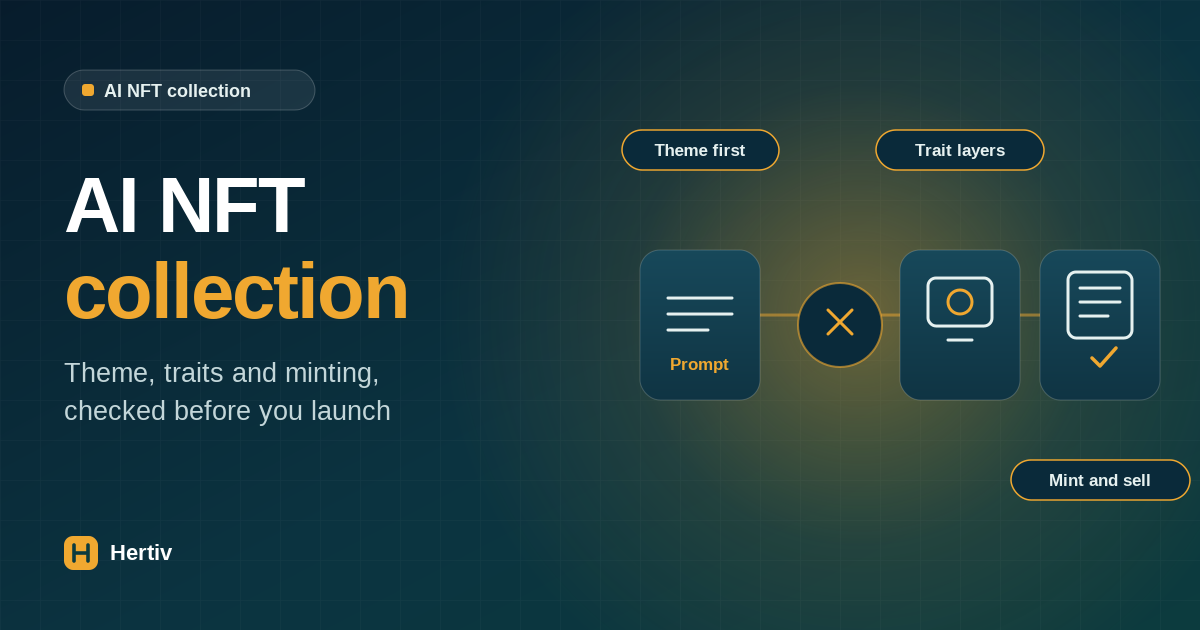
Generating the artwork follows a short sequence. First, write a style brief: the visual style, the colour range, the framing and what to avoid. A tight brief matters more than the tool, because vague prompts produce a mixed set that looks like several collections at once.
- Create the trait layers. Generate each trait as a separate image layer, such as backgrounds, characters and accessories, so they can be combined cleanly.
- Generate in batches. Produce each trait in one batch with the same prompt settings, so the style stays consistent across the set.
- Review every layer. Remove images with extra limbs, broken text or off-theme details before they reach the combination step.
- Combine with a script. A simple script layers the traits, applies the rarity weights and exports each unique piece with its metadata.
- Check the full set. Look at a sample of finished pieces for duplicates, broken combinations and trait counts that do not match the plan.
Keep the original prompt settings and the seed values for each batch. If you need to regenerate a trait later, matching settings are the only way to keep the new images in the same style.
How do metadata, rarity and minting work?
Metadata is the data attached to each token: its name, description, image link and trait list. Marketplaces read metadata to display the piece and to filter by trait, so it must be accurate. A wrong trait in the metadata makes a common piece look rare, which buyers notice fast.
Rarity is set by the trait weights in your combination script. If a trait has a 5% weight, about one piece in twenty should carry it. After generation, count the actual trait frequencies and compare them with the plan. Small drift is normal; a trait that appears twice as often as planned is a script error worth fixing.
Minting writes the tokens to the blockchain. You can mint the whole set at once or let buyers mint on demand. Before minting, test the contract on a test network, check the metadata links resolve, and confirm the royalty settings. A contract audit is worth the cost for any collection that takes real payments.
Example: a 500-piece AI art collection, worked out
Example (hypothetical): a small team plans a 500-piece collection of illustrated city animals. The trait system has 5 backgrounds, 6 animals, 5 outfits and 4 accessories. The team sets the price at 20 tokens per piece and keeps 25 pieces for the team and giveaways, leaving 475 for public sale.
Generation takes two days: one day for trait layers, one day for review and combination. The script produces 500 unique pieces. The team counts traits and finds one rare accessory appears 14 times instead of the planned 10, so they regenerate that trait layer and re-run the combination.
The arithmetic is simple: 475 pieces at 20 tokens is 9,500 tokens if the set sells out. Minting costs are paid per transaction, so the team budgets for 500 mints plus a small reserve for fixes. The launch sells 300 pieces in the first week, which is 6,000 tokens, and the team keeps the remaining 175 for later drops rather than cutting the price.
What are the common mistakes?
The most common mistakes in AI NFT collections are skipping the trait review, promising rights the team cannot grant, and launching with untested metadata.
- No trait review. AI images have errors. Review every layer before combining, or broken pieces reach buyers.
- Unclear rights. Say exactly what buyers receive: the image, commercial use, or nothing beyond the token. Vague rights cause disputes.
- Untested metadata. A broken image link makes the piece invisible on marketplaces. Test every link before minting.
- Changing supply after launch. Adding pieces later dilutes the value of the first buyers' tokens and damages trust.
- No plan for royalties. Royalty rules differ by marketplace. Confirm how they are enforced before promising them to the team.
How do you launch and support the collection after minting?
Launching is mostly communication. Announce the theme, the supply, the price and the mint date in one place, and answer questions in public so the same answers reach everyone. A short allowlist window for early supporters is a common way to reward the first buyers without adding complexity.
After minting, support means fixing metadata errors, answering ownership questions and keeping the community informed about what comes next. If the team promised future benefits, such as new drops or access to events, deliver them on the announced schedule or say clearly that the plan has changed.
If you need help with the contract or the marketplace side, hiring a specialist is worth considering; see how to hire NFT developers for what to check before signing.
For the wider picture of what tokens can do, what is blockchain explains the base technology.
Key takeaways
- AI generates trait layers and variations; humans decide theme, rarity, price and rights
- A trait system with rarity weights keeps the collection fair and easy to explain
- Review every AI image layer before combining, and count trait frequencies after generation
- Test metadata links and the contract on a test network before minting
- Fix supply and price before launch, and never change supply after minting
Frequently asked questions
Can I use AI art for an NFT collection commercially?
It depends on the tool you used. Some AI tools grant commercial use of generated images, others restrict it or keep rights with the provider. Check the licence of the tool before minting, and keep a record of the terms that applied when the art was made.
How many pieces should an NFT collection have?
There is no fixed number. Small curated drops run from 50 to 200 pieces, community collections often run from 500 to 2,000. Choose supply from your audience size and the price you need, not from what other collections did.
Do I need to write code to create an NFT collection?
You need some code for combining traits and minting, but no-code minting tools exist for simple drops. For a collection with custom rarity, royalties and a minting page, a developer or a minting platform is the safer route.
What is a trait in an NFT collection?
A trait is one attribute of a piece, such as background, character or accessory. Each piece is a combination of one option from each trait type, and rare traits appear in fewer pieces. Traits are listed in the token metadata.
How are NFT royalties paid?
Royalties are a share of later sales that returns to the creator. The rate is set in the contract or the marketplace listing, and enforcement differs by marketplace. Confirm the rules of each marketplace where the collection will be sold.
What does minting cost?
Minting cost is the blockchain transaction fee for writing each token, and it changes with network demand. Some chains charge a fraction of a token per mint, others more. Budget for the whole supply plus a reserve for fixes and re-mints.


