Chatbot Personality: How to Give Your Bot a Voice
Chatbot personality is the tone, voice and character your bot shows in every message. Learn how to pick one that fits your visitors and keeps chats finishing.
On this page
Short answer
A chatbot personality is the consistent tone, voice and character a chatbot shows in every message. It is set by the name, greeting, tone and fallback lines the team writes, and it decides whether visitors feel they are talking to a helper or to a machine reading a script.
What is chatbot personality?
Chatbot personality is the consistent tone, voice and character a chatbot shows in every message it sends. It covers how the bot greets people, how formal or casual it sounds, whether it uses humour, and how it handles mistakes. A chatbot with a clear personality feels like one helper, not a different stranger in every reply.
Personality is set by choices, not by the model alone. The team picks a name, a greeting style, a set of phrases for common moments, and rules for when the bot should stay serious. These choices are written down in a short style guide so every new answer follows the same voice.
| Trait | What it changes | Example |
|---|---|---|
| Tone | The mood of every reply | Warm and plain, not stiff |
| Name | How visitors address the bot | A short first name |
| Greeting | The first impression | One clear offer of help |
| Humour | How light the chat feels | None, or one light line |
| Formality | How close the bot feels | Plain words, short sentences |
The table shows the five traits that shape most of a bot's personality. Tone and formality set the mood, while the name and greeting set the first impression. Humour is the riskiest trait: a joke that lands well can warm a conversation, but one that misses can annoy a visitor who needs help.
Why does chatbot personality matter?
Chatbot personality matters because visitors judge a bot the way they judge a person: in the first few messages. A bot that sounds warm and clear gets more questions answered in the chat, while a bot that sounds cold or confusing pushes visitors to call or leave. Personality is the difference between a tool people use and a pop-up they close.
A steady personality also builds trust. When the bot uses the same words for the same situation, visitors learn what to expect and feel safe sharing details. When the tone jumps between formal and jokey, visitors stop trusting the answers, even when the facts are right.
Personality helps the business too. A bot that speaks in the brand's voice keeps the website feeling like one place, and a bot that stays polite under pressure protects the brand when a visitor is upset. For teams that run support bots, the guide on AI agents for customer support covers how tone fits into the wider support design.
How do you choose a chatbot personality?
You choose a chatbot personality by matching it to your visitors, your brand and the job the bot does. A bank's bot and a toy shop's bot should not sound the same, even if they answer the same kind of question. Work through the steps below before writing a single reply.
- List who talks to the bot and what they need. A worried patient needs calm and clarity; a shopper comparing shoes wants short, lively answers.
- Pick three words that describe the brand's voice, such as friendly, plain and patient, and use them to judge every draft reply.
- Write the greeting, the apology and the handover first. These three moments set the tone for the whole conversation.
- Decide the rules for humour and slang. Most business bots do better with none, or with one light line at most.
- Test the personality on five real visitors and ask whether the bot sounded like a helper or a machine reading a script.
Keep the style guide short, one page at most. A long guide is ignored, while a short one is used every time someone writes a new answer.
What parts make up a chatbot's personality?
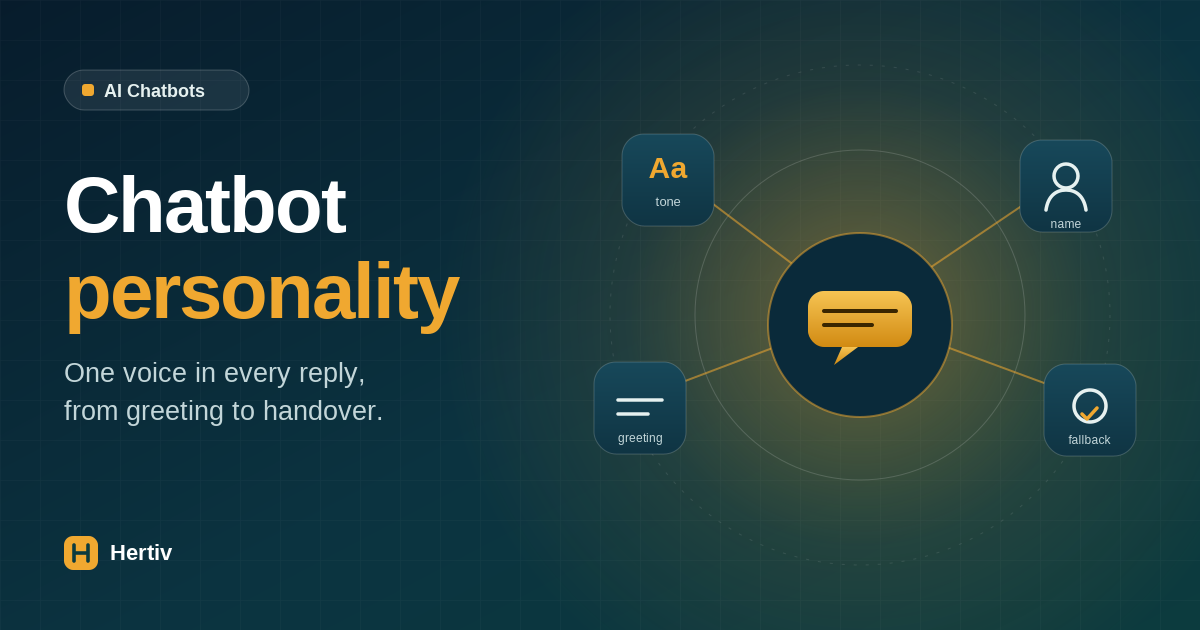
A chatbot's personality is made of small, repeatable parts: its name, its greeting, its tone, its fallback lines and the way it ends a chat. Each part is small on its own, but together they decide whether the bot feels helpful or robotic. Change one part at a time, so you can see what each change does.
- Name. A short name makes the bot easy to address and easy to remember.
- Greeting. One clear offer of help, with no jargon and no long menu.
- Tone. The same warmth in every reply, including the difficult ones.
- Fallback. A polite line that admits the miss and offers a person.
- Sign-off. A short close that confirms what happened next.
The fallback line matters most, because it appears when the bot fails. A flat reply such as 'I do not understand' ends the conversation. A line such as 'I did not catch that — could you say it another way, or shall I bring in a person?' keeps the visitor talking and gives them a way out.
Consistency is the part teams forget. If the bot greets visitors warmly but answers complaints in stiff legal language, the personality breaks. Read a full transcript once a week and mark every line that sounds like a different bot wrote it.
Example: a clinic chatbot finds its voice
Example (hypothetical): a small clinic runs a chatbot that books visits. The bot greets visitors with 'State your request' and answers in long, formal sentences. In one month, 400 visitors start a chat and only 120 finish booking. The team guesses the tone is putting people off.
The team rewrites the bot in a warm, plain voice. The greeting becomes 'Hello, I can help you book a visit — what day works for you?' Answers are cut to two short sentences, and the fallback offers a person. In the next month, 400 visitors start a chat and 200 finish booking. That is a rise from 30% to 50%, or 80 extra bookings a month, with the same number of visitors.
The change cost one afternoon of rewriting. The lesson is that personality is not decoration: for this clinic, the friendlier voice was worth 80 bookings a month, and the team now reviews the bot's tone each month alongside its answers.
What are the common mistakes?
The most common chatbot personality mistakes are copying a human too closely, changing tone mid-chat, and letting jokes do the work of clear answers. Each one is easy to make and easy to fix once you see it in a transcript.
- Pretending to be human. Visitors feel misled when they learn the 'person' was a bot. Say it is a bot in the greeting.
- Jokes in serious moments. A joke next to a billing error or a health question reads as careless, not friendly.
- A different tone in every answer. If answers were written by five people, the bot sounds like five bots.
- Long, clever answers. Visitors scan on a phone. Short, plain replies beat witty paragraphs.
- No fallback personality. The 'I do not understand' line needs the same care as the greeting.
- Never updating the voice. The brand changes, the visitors change, and the bot's voice should be reviewed with them.
A good test is to read the bot's replies out loud. If a line sounds odd spoken by a person, it will sound odd in a chat too. Rewrite it until it sounds like something a helpful colleague would say.
How do you test and improve a chatbot's personality?
You test a chatbot's personality by watching real visitors, not by asking the team whether the bot sounds nice. Show the bot to five people who have never seen it, let them use it for a real task, and ask them three questions: did it sound friendly, did it sound clear, and did it sound like our business?
Track two numbers. The first is completion: how many visitors finish the task they started. The second is handover: how many ask for a person after two bot replies. If completion rises and handover falls after a tone change, the new voice is working. If both stay flat, the problem is the answers, not the personality.
Improve in small steps. Change one trait, such as the greeting, and run it for two weeks before changing anything else. A personality that changes every week never settles, and visitors cannot learn what to expect from it.
Key takeaways
- Give the bot one voice and keep it in every reply
- Match the personality to your visitors, not to a trend
- Write the greeting, apology and handover first
- The fallback line is where personality matters most
- Test with real visitors and track completion, not opinions
Frequently asked questions
What is a chatbot personality?
It is the consistent tone, voice and character a chatbot shows in every message. It covers the name, greeting, tone, humour and fallback lines, and it is written down in a short style guide so every new answer sounds like the same helper.
Should a chatbot pretend to be human?
No. Saying the bot is automated in the greeting is honest and sets the right expectation. Visitors accept a bot that is open about what it is, but they feel misled when a bot pretends to be a person and then fails.
How formal should a business chatbot be?
Formal enough to be trusted, plain enough to be read quickly. Short sentences and everyday words work for most businesses. A bank or clinic can be a little more formal than a shop, but neither should sound like a legal letter.
Can a chatbot have humour?
Yes, in small amounts and only where nothing is at stake. One light line in a greeting can work. Jokes next to errors, payments or health questions do not. If in doubt, leave the joke out.
How do you write a chatbot style guide?
Keep it to one page: three words for the voice, the greeting, the apology, the fallback line and the handover line. Add one example of a good reply and one of a bad reply, then review it each month.
Does personality affect how many people finish a chat?
Yes. A warm, clear voice keeps more visitors in the chat, while a cold or confusing one pushes them to call or leave. Track completion before and after a tone change to see the effect on your own visitors.


