8 Marketing Automation Tools Worth Comparing
Eight marketing automation tools compared on fit, strengths and CRM integration, from simple email-first tools to enterprise B2B platforms.
On this page
Short answer
The marketing automation tools worth comparing are HubSpot, Salesforce Marketing Cloud, Marketo Engage, ActiveCampaign, Mailchimp, Klaviyo, Brevo and Oracle Eloqua. The right one depends on your CRM, list size and whether you need simple email flows or full B2B lead management.
Which marketing automation tools are worth comparing?
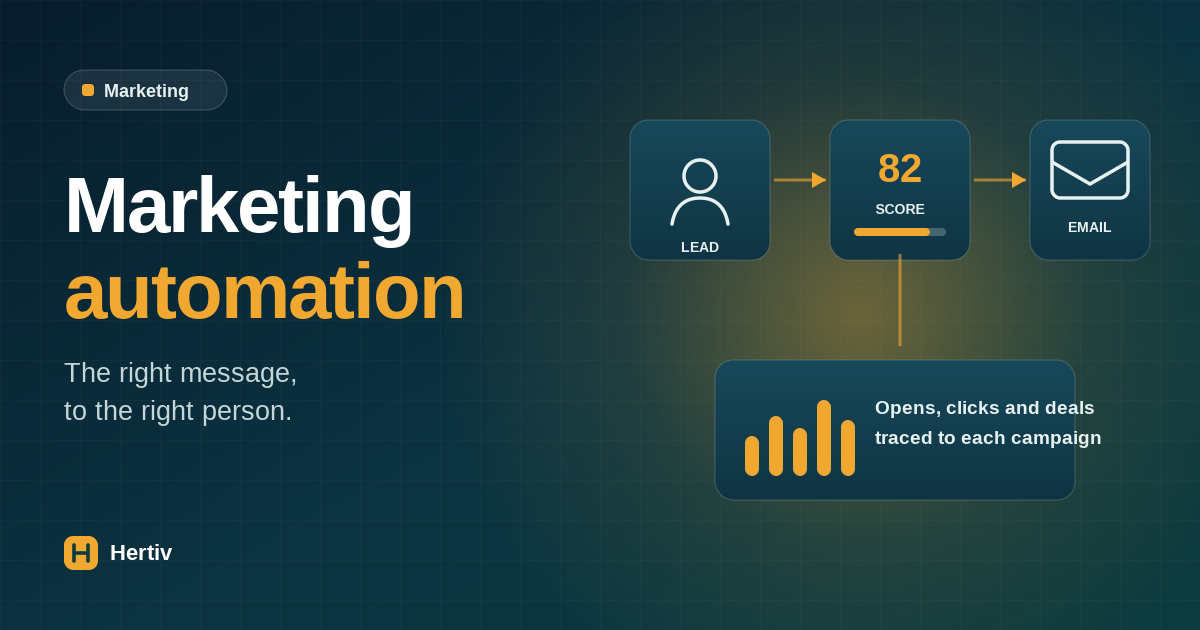
The marketing automation tools worth comparing are the ones that cover the full loop: capture a lead, score it, send the right message, and report what happened. A tool that only sends email is a mailing tool, not an automation platform.
Use this comparison to shortlist. Pricing changes often, so confirm the current plan on the vendor site before deciding.
| Tool | Best for | Core strength | CRM fit |
|---|---|---|---|
| HubSpot | Growing teams, all-in-one | CRM plus marketing in one place | Built-in CRM |
| Salesforce Marketing Cloud | Large enterprises | Multi-channel journeys | Salesforce CRM |
| Marketo Engage | B2B lead management | Lead scoring and nurturing | Salesforce, Dynamics |
| ActiveCampaign | Small and mid-size teams | Email plus sales automation | Built-in CRM |
| Mailchimp | Simple email-first teams | Easy campaigns and templates | Built-in, light CRM |
| Klaviyo | E-commerce and retail | Behaviour-based flows | Shopify, WooCommerce |
| Brevo | Budget-conscious teams | Email, SMS and chat | Built-in CRM |
| Oracle Eloqua | Large B2B enterprises | Complex campaigns at scale | Oracle, Salesforce |
Start with the CRM question, not the feature list. The tool that fits your CRM and your data will save more time than the one with the longest feature page.
HubSpot and Salesforce Marketing Cloud
1. HubSpot: best for growing teams that want one platform
HubSpot combines a CRM with marketing automation, so contacts, deals and campaigns live in the same system. That removes the sync problems that eat time in multi-tool setups, and it makes reporting simple: a campaign's result is visible next to the deal it produced.
The free tier covers the basics, and paid plans add workflows, scoring and attribution. Costs rise as contacts grow, so check the price at your real contact count — see vendor site.
- Pros: CRM and marketing in one place; easy to learn; good reporting for small teams.
- Cons: costs climb with contacts; advanced features sit on higher plans.
2. Salesforce Marketing Cloud: best for large enterprises
Salesforce Marketing Cloud is built for large teams running email, mobile, social and advertising journeys from one platform. It fits enterprises that already run Salesforce CRM, because the data is already there and the journey builder can use it directly.
It is powerful but heavy: setup needs specialists, and the learning curve is steep. Small teams rarely need this much platform.
- Pros: deep journey and channel coverage; strong with Salesforce CRM; scales to very large volumes.
- Cons: complex setup and steep learning curve; enterprise pricing — see vendor site.
Marketo Engage and ActiveCampaign
3. Marketo Engage: best for B2B lead management
Marketo Engage, from Adobe, is a B2B marketing automation platform built around lead scoring, nurturing programmes and account-based marketing. It fits teams with long sales cycles, where a lead may need months of messages before it is ready for sales.
Its strength is in lead lifecycle work: scoring rules, programme templates and revenue attribution. The interface is dated and setup takes time, so it suits teams with a dedicated marketing operations person.
For a startup-focused comparison, see best marketing automation platforms for startups.
- Pros: strong lead scoring and nurturing; good account-based marketing; solid Salesforce integration.
- Cons: dated interface; needs a marketing operations owner to run well.
4. ActiveCampaign: best for small and mid-size teams
ActiveCampaign pairs email automation with a built-in CRM and sales automation, which suits small teams that want one tool for marketing and follow-up. Its visual automation builder is easy to use, and its pricing is lower than the enterprise platforms.
It works well for teams sending regular campaigns and running behaviour-based flows. Very large senders or teams needing deep multi-channel journeys may outgrow it.
- Pros: easy automation builder; CRM included; fair pricing for small teams — see vendor site.
- Cons: reporting is lighter than enterprise tools; less suited to very large volumes.
Mailchimp and Klaviyo
5. Mailchimp: best for simple email-first teams
Mailchimp is the simplest tool on this list, built around email campaigns, templates and basic automation. It fits small teams and solo marketers who need to send good-looking campaigns without learning a platform.
It has added CRM features and customer journeys, but it is still an email tool at heart. Teams that need serious lead scoring or multi-step nurture programmes usually move on.
- Pros: very easy to start; good templates; free tier for small lists.
- Cons: limited lead scoring and nurturing; costs rise as the list grows.
6. Klaviyo: best for e-commerce and retail
Klaviyo is built for online stores, with flows triggered by shopping behaviour: abandoned carts, browse abandonment, post-purchase follow-up and win-back campaigns. It connects closely with Shopify and WooCommerce, so purchase data flows straight into segments.
For e-commerce teams it is hard to beat, because the segmentation is based on what people actually bought and browsed. For B2B or non-commerce teams, most of its value is irrelevant.
- Pros: behaviour-based e-commerce flows; strong Shopify integration; clear revenue reporting.
- Cons: built for e-commerce, not B2B; pricing grows with contacts — see vendor site.
Brevo and Oracle Eloqua
7. Brevo: best for budget-conscious teams
Brevo, formerly Sendinblue, covers email, SMS and chat in one platform with a free tier and low paid plans. It fits small teams and non-profits that need solid automation without enterprise pricing, and its pricing is based on emails sent rather than contacts stored.
That pricing model suits teams with large lists but modest sending volumes. Its automation and CRM features are simpler than HubSpot or Marketo, so teams with complex nurture programmes may feel the limits.
- Pros: low cost and a useful free tier; email, SMS and chat in one place; simple to run.
- Cons: simpler automation than enterprise tools; reporting is basic.
8. Oracle Eloqua: best for large B2B enterprises
Oracle Eloqua is an enterprise B2B marketing automation platform for complex, multi-stage campaigns across regions and business units. It fits large organisations that already run Oracle systems and need deep segmentation, lead management and campaign governance.
It is one of the most capable tools here and one of the heaviest. Implementation usually needs specialists, and the interface reflects its enterprise roots.
- Pros: deep B2B campaign and lead features; strong at enterprise scale; good governance controls.
- Cons: complex setup; needs specialists to run; enterprise pricing — see vendor site.
How to choose a marketing automation tool
Choosing a marketing automation tool is mostly about fit with your CRM, your list size and your team's skill. The tool with the most features is rarely the one that gets used every week.
- Start with your CRM. Pick a tool that connects cleanly to the CRM you already use, or one with a CRM built in.
- Count your contacts honestly. Price the tool at your real contact count and expected growth, not at today's list.
- Map one journey end to end. Walk a real lead through capture, scoring, email and handover in a trial before you buy.
- Check who will run it. Enterprise tools need an owner; if nobody owns it, pick the simpler tool.
- Test reporting on a real campaign. Make sure you can answer which campaign produced which deal before you commit.
For teams that want AI help with the marketing side, AI agents for marketing covers how automation and agents fit together.
A comparison of email marketing automation software is useful if email is the main channel you care about.
What are the common mistakes?
The most common mistakes in marketing automation are buying too much platform, importing a dirty list, and automating messages nobody reads.
- Buying the enterprise tool first. A large platform with no owner becomes shelfware; start with the tool your team will actually use.
- Importing a dirty list. Old, duplicate or unconsented contacts hurt deliverability and make every report unreliable.
- Automating without a goal. Every flow should have one purpose and one measure, such as replies or purchases.
- No lead scoring rules. Without scoring, sales gets every lead at once and stops trusting the handover.
- Never cleaning the data. Segments decay as people change jobs and interests, so schedule a regular list review.
Key takeaways
- Start with CRM fit, not the feature list
- Price the tool at your real contact count, not today's list
- Enterprise tools need a dedicated owner to be worth the cost
- E-commerce teams should weigh behaviour-based flows heavily
- One working flow beats ten planned ones
Frequently asked questions
What is marketing automation software?
Marketing automation software sends the right message to the right person at the right time without manual work for each contact. It covers email campaigns, lead scoring, segmentation, nurture flows and reporting on what each campaign produced.
Do I need marketing automation if I already send email?
Not always. If you send one newsletter a month to a small list, a simple email tool is enough. Automation pays off when you run many flows, score leads, or need to know which campaign produced which deal.
How much does marketing automation cost?
Prices vary widely by contacts and features, and they change often, so check the vendor site for the current plan. Most tools charge by contacts or emails sent, and costs climb as the list grows.
Which marketing automation tool is best for small teams?
Small teams usually do best with ActiveCampaign, Mailchimp or Brevo, because they are easy to run and priced for small lists. HubSpot also works well if the team wants CRM and marketing in one place.
Does marketing automation replace a CRM?
No. Marketing automation works with a CRM, and some tools include a light CRM. The CRM holds the customer record and the deal; the automation tool runs the campaigns and hands leads to sales at the right time.
How do I switch marketing automation tools?
Export your contacts, segments, templates and flow logic, then rebuild the highest-value flows first in the new tool. Run both tools briefly if you can, and clean the list before import so bad data does not follow you.


