IoT Connectivity Benefits: What the Right Link Gives You
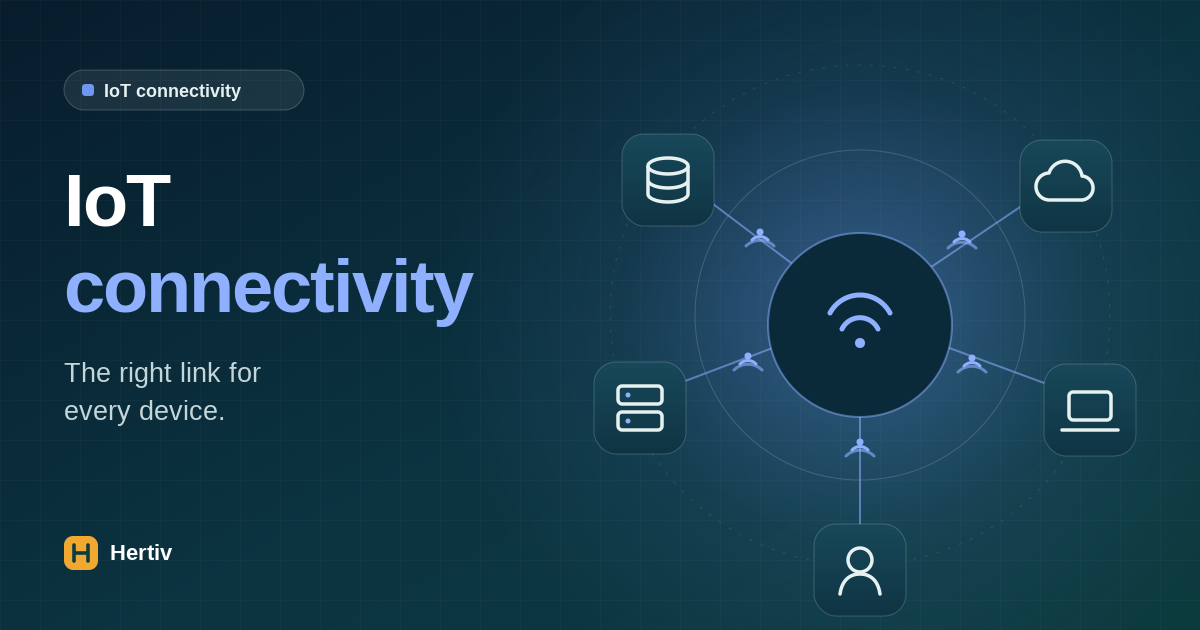
The right IoT link gives long battery life, wide coverage, low cost per device and reliable data, but only when the radio matches the job it has to do.
On this page
Short answer
IoT connectivity benefits come from matching the link to the job: low-power links give years of battery life for sensors that send small readings, cellular and 5G give speed and coverage for cameras and vehicles, and satellite reaches places no other network covers. The right link also cuts cost per device and keeps data arriving reliably.
What is IoT connectivity?
IoT connectivity is the link that carries data between a connected device and the system that uses it. It covers the radio technology, the network and the rules that decide how often a device sends data, how much it sends, and what happens when the signal drops.
The choice matters because it shapes everything else: battery life, coverage, cost per device, security and how fast data arrives. A sensor on a farm gate and a camera on a factory floor need very different links, even though both are IoT devices.
The farm sensor sends a few bytes once a day and must run for years on one battery, while the camera streams video all day and needs speed and a mains supply. Getting the link wrong means either paying for capacity the device never uses, or watching a battery die in months instead of years. For the wider picture, see benefits of IoT.
What are the main benefits of good IoT connectivity?
Good IoT connectivity gives a project four benefits at once: devices stay reachable where they are installed, batteries last for years instead of months, the cost per device stays low, and data arrives reliably enough to act on. The table below compares the main options.
| Connectivity | Main benefit | Typical use | Watch out |
|---|---|---|---|
| NB-IoT | Years of battery life | Meters, sensors, trackers | Low data rates |
| LoRaWAN | Long range, low power | Farms, campuses, cities | Needs a gateway network |
| Cellular 4G/5G | Wide coverage, high speed | Vehicles, cameras, fleets | Higher power and data cost |
| Wi-Fi | Cheap, fast indoors | Buildings, factories, shops | Short range, needs power |
| Satellite | Works where nothing else does | Remote sites, ships, pipelines | Cost and latency |
| Bluetooth | Very low power, short range | Wearables, asset tags | Needs a nearby hub |
The benefit is not the radio itself but the match between the radio and the job. A meter that sends a reading once a day gains nothing from 5G speed, while a camera that streams video gains nothing from NB-IoT battery life. Pick the link after the job is clear, not before.
How does connectivity extend battery life?
Connectivity extends battery life when the device spends most of its time asleep and wakes only to send a short message. Low-power options such as NB-IoT and LoRaWAN are built for this pattern: the radio draws little current, the message is small, and the device returns to sleep in seconds.
The saving is large in practice. A water meter that reports once a day on NB-IoT can run for years on one battery, because the radio is off for almost all of that time. The same meter on a cellular link that stays connected would need a battery change far sooner, and each visit costs more than the battery itself.
Three choices drive battery life: how often the device sends, how much data each message carries, and how long the radio stays awake waiting for a reply. Keep messages short, send only when something changed, and let the device sleep between sends. For the NB-IoT pattern in detail, see NB-IoT use cases.
How does connectivity cut costs across a fleet of devices?
Connectivity cuts costs when the link matches the data volume, because the cheapest link that can carry the job is usually far cheaper than the fastest one. A fleet of ten thousand sensors sending a few bytes a day costs very little on a low-power network, and far more on a plan built for phones.
The cost has three parts: the radio hardware in each device, the data plan or network fee, and the work of keeping devices connected. Low-power radios cost less than cellular modems, low-data plans cost less than high-data ones, and a link that rarely drops needs fewer site visits to fix.
Plan the cost per device per year, not per month, and include the site visits. A link that saves a few cents a month but needs a technician visit once a year is the expensive option. The cheapest fleet is usually the one with the simplest link that still carries the data on time.
How does connectivity improve reliability and coverage?
Connectivity improves reliability when the link is chosen for the place the device actually sits. Cellular covers roads and towns, LoRaWAN covers farms and campuses with a few gateways, satellite covers the places where neither reaches, and Wi-Fi covers buildings where power is already available.
Reliability also comes from planning for failure. A device that stores readings when the signal drops and sends them when it returns loses nothing to a short outage. A device that drops readings on a failed send loses data every time the network blinks, and the gaps show up later as missing history.
Test coverage where the devices will sit, not on a map. Walls, metal roofs, basements and hills all change signal strength, and a site survey with a real device finds the dead spots before the fleet is installed. For remote monitoring patterns, see IoT remote monitoring solutions.
Example (hypothetical): a farm that watches 200 soil sensors
Example (hypothetical): a farm installs 200 soil sensors across fields that have no mains power and patchy phone signal. Each sensor sends one small reading a day, and the farmer checks moisture on a phone each morning.
On a low-power LoRaWAN link, each sensor runs about 5 years on one battery, and two gateways cover the whole farm. The farm spends one day installing gateways and sensors, and then almost no time on maintenance. The readings arrive each morning in time for the irrigation decision.
On a cellular link, each sensor would need a battery change roughly every year, which is 200 site visits a year, plus a data plan per device. The readings would arrive the same way, but the farm would spend far more time and money keeping the fleet running. The cheaper link is the one that matches the job: small daily readings, long battery life, wide coverage.
What are the common mistakes?
The most common IoT connectivity mistakes are picking the fastest link by default, ignoring coverage at the real site, and forgetting what happens when the signal drops.
- Choosing 5G or 4G for a sensor that sends a few bytes a day
- Trusting a coverage map instead of testing with a real device on site
- Letting the device drop readings when the signal fails, instead of storing and retrying
- Ignoring the cost of battery changes and site visits across the fleet
- Skipping security, so devices send data with no encryption or authentication
- Locking the fleet to one network with no way to switch later
The pattern behind every mistake is the same: the link was chosen before the job was clear. Name the data volume, the send frequency, the site and the battery target first, and the right link usually picks itself. Cybersecurity in IoT covers the security side that every link needs.
Key takeaways
- The link shapes battery life, coverage, cost and reliability, so pick it after the job is clear.
- Low-power links such as NB-IoT and LoRaWAN suit sensors that send small readings rarely.
- Cellular and 5G suit cameras and vehicles that need speed and wide coverage.
- Devices should store readings when the signal drops and send them when it returns.
- Test coverage on site with a real device; maps do not show dead spots.
- Count battery changes and site visits in the cost, not just the data plan.
Frequently asked questions
What is IoT connectivity?
IoT connectivity is the link that carries data between a connected device and the system that uses it. It covers the radio technology, the network and the rules for how often a device sends data, how much it sends, and what happens when the signal drops.
Which IoT connectivity option is best for battery life?
NB-IoT and LoRaWAN give the longest battery life, because the device sleeps most of the time and wakes only to send a short message. A sensor that reports once a day can run for years on one battery, which matters when changing batteries means a site visit.
Is 5G always the best choice for IoT?
No. 5G gives speed and low delay, which suits cameras, vehicles and real-time control, but it uses more power and costs more per device. A meter that sends one reading a day gains nothing from 5G and loses battery life, so a low-power link is the better pick.
How does IoT connectivity affect security?
Every link needs encryption and device authentication, because an unprotected device can be read or spoofed. Cellular networks add their own security, while LoRaWAN and Wi-Fi need the project to add encryption and key management on top.
What happens when an IoT device loses signal?
A well-built device stores its readings and sends them when the signal returns, so nothing is lost. A device that drops readings on a failed send creates gaps in the history, which is why store-and-retry behaviour should be part of the design from the start.
How do I choose between NB-IoT, LoRaWAN and cellular?
Start with the job: how much data, how often, where the device sits, and how long the battery must last. Small rare readings on remote sites suit NB-IoT or LoRaWAN, while video or moving devices suit cellular. Test the shortlisted link on site before buying the fleet.