AI in Healthcare Workforce Optimization: Fewer Gaps
AI helps hospitals and clinics match staff to patient demand, cut agency spend and spot burnout early. Here is how it works, where it helps most, and how to start.
On this page
Short answer
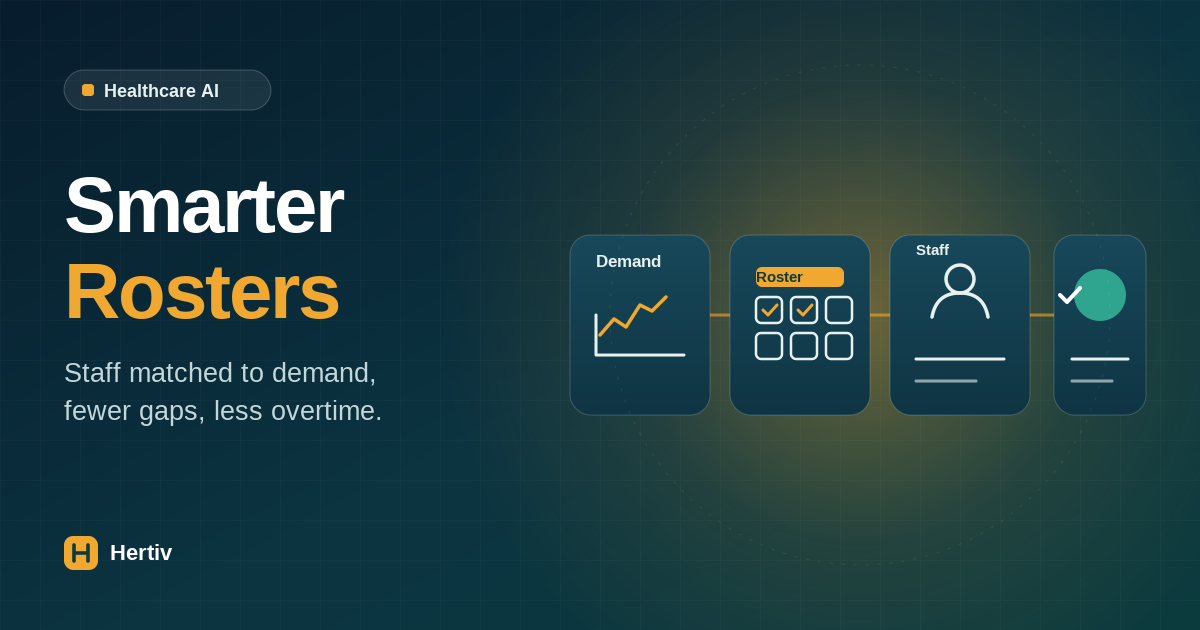
AI healthcare workforce optimization uses patient demand forecasts, staff skills and availability data to build rosters that cover shifts with fewer gaps, less overtime and less agency spend. It predicts demand, flags burnout risk and keeps the schedule fair, while managers keep the final say on every roster.
What is AI healthcare workforce optimization?
AI healthcare workforce optimization is the use of software to plan, roster and support clinical staff so the right people are on duty at the right time. It combines patient demand forecasts with staff availability, skills, contracts and fatigue rules, then proposes rosters a manager reviews and approves.
It is not a replacement for ward managers. The software handles the arithmetic of matching hundreds of shifts to hundreds of people, and humans handle the judgement calls: a nurse who needs a lighter week, a clinic that needs a specific skill mix, or a sudden absence.
| Job | What AI does | What stays human |
|---|---|---|
| Demand forecast | Predicts admissions and visits | Judging unusual events |
| Rostering | Drafts shift plans in minutes | Approving and adjusting rosters |
| Agency use | Flags when agency cover is needed | Choosing the agency and rate |
| Burnout signals | Spots heavy overtime patterns | Talking to the staff member |
| Skills mix | Checks credentials per shift | Coaching and development |
Most hospitals already hold the data this needs: past admissions, rosters, absence records and agency invoices. The work is joining that data up and using it to plan ahead, which is where AI workforce management in general is heading.
How does AI predict staffing demand?
AI predicts staffing demand by learning patterns in past patient numbers: day of the week, season, local events, clinic hours and ward type. A medical ward fills differently from a surgical ward, and a winter flu peak looks different from a summer lull, so the forecast is built per unit rather than per hospital.
The forecast feeds the roster directly. If Tuesday nights usually need six nurses and the model expects a busy week, the roster opens with six rather than four, and the manager is not left scrambling for agency cover at short notice.
Forecasts are never perfect, so good tools show a range, not a single number. A range of five to seven nurses tells a manager to plan for six and keep one person on call, which is more useful than a false promise of exactly six.
How does AI build fairer rosters?
AI builds fairer rosters by applying the same rules to everyone: rest days between night shifts, limits on consecutive weekends, skill mix per shift and contract hours. A manager still approves the roster, but the software stops the quiet unfairness where the same people always cover the hard shifts.
Staff can usually state preferences, such as no nights on certain dates or a preferred ward, and the software weighs those against coverage needs. When a preference cannot be met, the reason is visible, which reduces the sense that rosters are decided behind closed doors.
Fairness also means transparency about overtime. If one nurse has worked three extra weekends while another has worked none, the pattern is visible in the data and the manager can correct it before it becomes a resignation.
What can AI do about agency spend and overtime?
AI cuts agency spend by spotting gaps early enough to fill them from the bank or float pool instead of an agency. A gap found two weeks ahead can be offered to existing staff at normal rates; the same gap found the night before usually means an agency nurse at a premium.
Overtime falls the same way. When the roster matches demand, fewer shifts run short, so fewer staff are asked to stay late. The saving is not just money: tired staff make more errors, so a roster that respects rest limits also protects patients.
To see whether it is working, track agency hours and overtime hours per ward each month. A steady fall in both, with no rise in unfilled shifts, is the clearest sign the planning is improving. For the software side, healthcare workforce management software covers what to look for in a product.
How does AI spot burnout before staff quit?
AI spots burnout risk by watching patterns, not by reading minds: rising overtime, shrinking gaps between night shifts, cancelled leave and repeated short-notice cover. None of these proves burnout on its own, but together they mark the people a manager should check in with.
The point is early, human action. A flag should trigger a conversation, not an automated message or a disciplinary note. Staff trust the system only when flags lead to support, such as a lighter rota or approved leave, rather than punishment.
Privacy matters here. Overtime and shift patterns are work data, but health information is not, and the two must stay separate. Keep burnout signals inside the staffing team and never feed them into performance reviews.
Example (hypothetical): a 300-bed hospital fixes its rosters
Example (hypothetical): a 300-bed hospital runs 40 wards and spends heavily on agency nurses. Its managers build rosters by hand in spreadsheets, and gaps are often found the day before a shift.
The hospital pilots AI rostering on six wards. The software forecasts demand from a year of admissions data, drafts rosters that respect rest rules, and flags gaps two weeks ahead so the bank pool can cover them first.
After three months the six wards cut agency hours from 400 to 240 per month, a fall of 160 hours, while unfilled shifts stay flat at 12 per month. Overtime falls from 300 to 210 hours a month. The hospital then rolls the pilot out ward by ward, keeping managers in charge of every final roster.
How to start in six steps
You start by fixing the data and piloting on one ward, not by buying software for the whole hospital at once.
- Pick one ward. Choose a ward with stable demand and a manager who wants the pilot.
- Gather a year of data. Admissions, rosters, absence and agency invoices for that ward.
- Set the rules. Rest limits, skill mix and contract hours the roster must respect.
- Run a shadow roster. Let the software draft rosters for a month while managers keep the old method, then compare.
- Measure three numbers. Agency hours, overtime hours and unfilled shifts per month.
- Roll out ward by ward. Expand only where the numbers improve and staff accept the tool.
A short proof of concept with a fixed ward and fixed measures is the cheapest way to learn whether the data is ready. If you need help scoping it, an AI readiness assessment shows which data and process gaps to close first.
What are the common mistakes?
The most common mistakes in healthcare workforce optimization are trusting the forecast blindly, hiding the rules from staff, and rolling out too fast.
- No human approval. A roster the software publishes without a manager review will eventually put the wrong skill mix on a shift.
- Dirty data. Forecasts built on incomplete absence or admission records mislead the roster for months.
- Secret rules. Staff who cannot see why they got a shift assume the worst and stop trusting the system.
- Burnout flags as discipline. Using overtime patterns in performance reviews destroys trust fast.
- Big-bang rollout. Rolling out to every ward at once leaves no time to fix data or train managers.
Key takeaways
- AI matches staff to predicted patient demand instead of last-minute agency cover
- Fair rosters apply the same rest and skill rules to everyone, with managers approving
- Early gap warnings cut agency hours and overtime without raising unfilled shifts
- Burnout flags should trigger a human conversation, never discipline
- Start on one ward, measure agency hours, overtime and unfilled shifts
Frequently asked questions
Does AI replace ward managers in rostering?
No. AI drafts rosters and flags risks, but a manager approves every roster and handles the judgement calls, such as a nurse who needs a lighter week or a shift that needs a specific skill. The software does the arithmetic; the manager owns the decision.
What data does healthcare workforce AI need?
It needs past admissions and visits, rosters, absence records, staff skills and contracts, and agency invoices. A year of history for one ward is enough to start a pilot. Clean, joined-up records matter more than the volume of data.
How much can AI cut agency spending?
It varies by hospital, because agency use depends on how early gaps are found and how strong the bank pool is. Hospitals that find gaps two weeks ahead usually cut agency hours noticeably, but treat any vendor promise of a fixed saving with care and run your own pilot.
Is staff data safe in these tools?
Rosters and shift patterns are work data and can be used for planning, but health information must stay separate and access must be limited to the staffing team. Check where the data is hosted, who can see it, and how long it is kept before you sign.
Does this work for small clinics as well as hospitals?
Yes, on a smaller scale. A clinic with twenty staff can use demand forecasts for appointment peaks and holiday cover, though the gains are smaller than in a large hospital. The same rules apply: start small, keep a human approving rosters, and measure the result.
What is the difference from general workforce management software?
General workforce tools handle scheduling for any industry, while healthcare tools add clinical skill mix, rest rules, credential checks and patient demand forecasts. If your team only needs rosters, a general tool may do; if it needs clinical rules, a healthcare-specific one fits better.