AI Chatbots in Travel: What They Do for Travellers
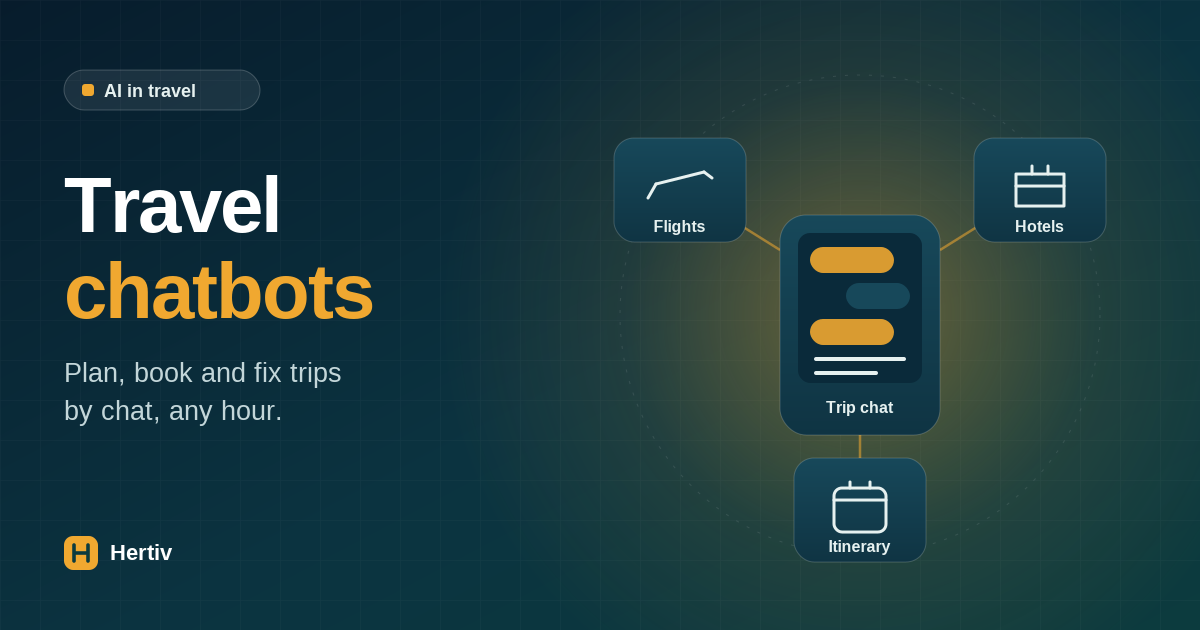
AI chatbots in travel answer questions, help plan trips and fix booking problems at any hour. Here is what they do well, where they fall short, and how to use them.
On this page
Short answer
AI chatbots in travel are text-based assistants that help travellers search flights and stays, plan itineraries, change bookings and get help during a trip. They work around the clock, remember the details of a booking, and hand over to a human when a problem needs judgement, such as a refund dispute or a medical emergency.
What are AI chatbots in travel?
An AI chatbot in travel is a text-based assistant that helps travellers plan, book and manage trips through chat, usually inside an app, a website or a messaging service. It answers questions, searches options and carries out small tasks such as changing a seat or checking a flight.
Unlike a search box, a chatbot holds a conversation. It can ask what matters to you, such as a budget or a departure time, and use the answers to narrow the results it shows.
Chatbots are not the same as voice agents, which talk to travellers by phone. A chatbot works in writing, which suits travellers who are comparing options or travelling in a noisy place. See how AI voice agents in travel handle the same jobs by phone.
| Task | What the chatbot does | Human needed? |
|---|---|---|
| Search flights and stays | Asks for dates and budget, shows options | No, for simple searches |
| Plan an itinerary | Suggests a day-by-day plan from your notes | No, for simple trips |
| Change a booking | Checks rules and applies allowed changes | Yes, for paid changes |
| Help during a trip | Shares gate, delay and check-in updates | No, for status updates |
| Refunds and complaints | Collects details and starts the case | Yes, for decisions |
| Local tips | Suggests places, food and transport | No, for general tips |
How do travel chatbots find the right options?
A travel chatbot starts with what you tell it: where you want to go, when, and what you can spend. It then searches live flight and hotel data and shows a short list instead of hundreds of results.
Good chatbots explain why they picked each option. A flight that is cheap but needs two stops is only useful if you know about the stops, so the chatbot should say so before you book.
The chatbot also remembers the trip. When you ask about a hotel later, it should know which flight you booked and suggest a stay that fits the arrival time.
What can chatbots do during a trip?
During a trip, a chatbot is most useful for small, urgent questions. It can tell you the gate for your flight, whether the flight is delayed, and what time check-in opens at your hotel.
It can also help when plans change. If a flight is cancelled, the chatbot can show the next options and start a rebooking, which is faster than waiting in a phone queue at an airport.
For problems that need judgement, the chatbot should hand over to a person. A refund dispute, a missed connection with a tight schedule, or a medical problem needs a human who can make a decision and take responsibility for it.
How do chatbots handle bookings and payments?
A chatbot can take a booking from search to payment, but it must do so carefully. It should show the full price, the change rules and the cancellation rules before asking you to pay.
Payments need a secure step. A good chatbot sends you to a normal payment screen rather than asking for card details in chat, and it confirms the booking with a reference number you can keep.
After payment, the chatbot should send the booking details and keep them ready. When you ask later, it should find the booking by your name or reference, not ask you to repeat everything.
Example (hypothetical): a family trip to the coast
Example (hypothetical): a family of four plans a three-night trip to the coast. They tell the chatbot they need two rooms, a beach nearby, and a total stay budget of $600.
The chatbot shows three hotels. The cheapest costs $140 a night, or $420 for three nights, and sits 10 minutes from the beach. The second costs $180 a night, or $540 for three nights, and sits 2 minutes from the beach.
The family picks the second hotel because the beach is closer for the children. The chatbot books two rooms for $540, adds breakfast at $15 per person per day, which is 4 people times 3 days times $15, or $180, and the trip total becomes $720.
The chatbot then books a car for the airport transfer at $45 each way, or $90 in total, and sends one message with the hotel booking, the car booking and the check-in times. The arithmetic is $540 + $180 + $90 = $810 for the whole trip.
Where do travel chatbots fall short?
Chatbots are weak when the question is vague or the answer needs local knowledge. A question such as "where should we eat tonight" needs to know your tastes, your location and what is open, and a chatbot often gives a generic list.
They also struggle with unusual requests. A traveller who needs a wheelchair-friendly room near a lift, or who is travelling with a pet, may get wrong answers because those details are not in the data the chatbot reads.
Chatbots can also sound confident when they are wrong. A chatbot that invents a hotel policy or a flight time can cause a missed booking, so travellers should check important details against the airline or hotel directly.
How to get the best from a travel chatbot
You will get better answers if you give the chatbot clear details. State your dates, budget, party size and what matters most, such as a short flight or a quiet hotel, before asking for options.
Ask the chatbot to show its working. Request the full price, the change rules and the reason it picked each option, and read those details before you pay.
Use the chatbot for planning and small tasks, and ask for a human when money or safety is at stake. A refund, a medical problem or a missed connection deserves a person, not a chat window.
Common mistakes
The most common mistake is booking through a chatbot without reading the change and cancellation rules. A cheap fare that cannot be changed is a bad deal if your plans shift.
The second mistake is trusting every answer. Chatbots can invent details, so check flight times, hotel names and prices against the provider before you travel.
The third mistake is sharing sensitive details in chat. Never send passport numbers or card details in a chat window; use the secure payment screen instead.
The fourth mistake is expecting a chatbot to solve a serious problem. When a flight is cancelled or a booking is wrong, ask for a human early instead of arguing with the bot.
Key takeaways
- Travel chatbots help search, plan, book and fix small problems by chat.
- They remember your trip details and work around the clock.
- They should show full prices and change rules before you pay.
- They hand over to a human for refunds, disputes and emergencies.
- Check flight times and prices against the provider before you travel.
- Never share passport or card details in a chat window.
Frequently asked questions
Can a travel chatbot book my whole trip?
Yes, for simple trips it can search, compare and book flights, stays and transfers in one conversation. For complex trips with special needs, it is better to use the chatbot for planning and confirm the booking with a person.
Are travel chatbots available at any hour?
Yes, chatbots work around the clock, which is useful when you are in another time zone or your flight changes late at night. Human agents are usually only available during set hours, so late problems may wait until morning.
Can a chatbot change my flight?
It can apply changes that the fare rules allow, such as picking a different seat or moving to an earlier flight on the same day. Paid changes and refunds usually need a human agent who can approve the cost.
Is it safe to pay through a travel chatbot?
It is safe when the chatbot sends you to a secure payment screen. Never type card details into the chat itself, and check that the payment page belongs to the travel company.
What is the difference between a travel chatbot and a voice agent?
A chatbot works in writing, which suits comparing options and keeping a record of what was agreed. A voice agent talks by phone, which suits hands-free help while driving or waiting at an airport.
Can chatbots give local travel tips?
They can suggest popular places, food and transport, but their tips are often generic and based on what most tourists like. For real local knowledge, ask hotel staff or a local guide who knows the area well.


